
Sauerkraut Recipe: Making sauerkraut at home is easier than many people think. With fresh cabbage, the right amount of salt, and a little patience, I can turn an ordinary vegetable into a tangy, crunchy fermented food. I love recipes like this because they use simple ingredients and traditional techniques without requiring complicated cooking equipment.
This homemade sauerkraut recipe creates finely shredded cabbage with a pleasantly sour flavor and a satisfying crunch. I can serve it alongside sausages, sandwiches, roasted vegetables, burgers, or other favorite meals. It is also a useful way to preserve fresh cabbage and enjoy its distinctive fermented taste.
Hi, my name is Om Shinde. I am a chef who enjoys experimenting with simple ingredients and preparing homemade recipes that my family and relatives love. Cooking has always been a wonderful way for me to explore different flavors and share delicious food with others. I also enjoy sharing recipes and cooking ideas on social media to help people prepare enjoyable meals in their own kitchens.
For this recipe, I focus on fresh cabbage, accurately measured salt, clean equipment, and proper fermentation conditions. These details help produce sauerkraut with a good texture and balanced sourness.
Recipe Overview
| Detail | Information |
|---|---|
| Prep Time | 25 minutes |
| Active Time | 25 minutes |
| Fermentation Time | Approximately 3–4 weeks |
| Total Time | Approximately 3–4 weeks |
| Cuisine | German-inspired |
| Course | Side Dish / Condiment |
| Servings | Approximately 12 |
| Difficulty | Easy |
| Main Ingredient | Green cabbage |
| Cooking Method | Natural fermentation |
| Estimated Cost | $3–$6 |
| Storage | Refrigerate after fermentation |
The fermentation time can vary depending on room temperature and personal taste. The cabbage should remain submerged in brine throughout the process, and the salt amount should not be reduced casually.
What Makes Sauerkraut Different From Regular Cabbage
Sauerkraut is a traditional fermented cabbage dish commonly associated with German cuisine. Unlike a regular cabbage salad or cooked cabbage side dish, sauerkraut develops its characteristic tangy flavor through fermentation.
When shredded cabbage is mixed with salt, the salt draws moisture from the vegetable and helps create a natural brine. Beneficial lactic acid bacteria use naturally occurring sugars in the cabbage and produce acids that gradually create the familiar sour taste.
I like sauerkraut because its flavor is quite different from fresh cabbage. It has a tangy, slightly salty taste and can add a refreshing contrast to rich or savory dishes.
Homemade sauerkraut also allows me to control the cabbage texture and the length of fermentation. However, it is important to follow a reliable method because the salt ratio, cleanliness, temperature, and keeping the cabbage submerged all matter for safe fermentation.
Why I Love Making This Traditional Recipe
One of my favorite things about sauerkraut is its short ingredient list. I do not need a long shopping list or expensive equipment to prepare it at home.
Another advantage is its versatility. I can serve a small portion alongside a meal, add it to a sandwich, or use it as a topping for a homemade burger.
The preparation itself is straightforward. Most of the work involves shredding the cabbage, mixing it with salt, massaging it to release its juices, and packing it into a suitable fermentation container.
The biggest requirement is patience. Unlike a quick salad, sauerkraut needs time for fermentation to develop its characteristic flavor.
Fresh Ingredients for the Best Results
I prefer using a firm, fresh head of green cabbage. Fresh cabbage generally provides a good texture and enough moisture to help form the brine.
Ingredients Table
| Ingredient | Quantity | Purpose |
|---|---|---|
| Fresh green cabbage | 2 lb (907 g) | Main ingredient |
| Canning or pickling salt | 18–23 g | Supports fermentation and draws out moisture |
The salt quantity is based on approximately 2–2.5% of the cabbage’s weight. Weighing both ingredients is more reliable than using tablespoons because different types of salt have different densities. Use the measured amount rather than reducing salt to make the recipe less salty.
Optional Ingredients
Traditional sauerkraut needs only cabbage and salt. If you want to experiment with flavor, you can add small amounts of caraway seeds or other whole spices, provided you use a reliable fermentation method and do not change the cabbage-to-salt ratio.
For my basic version, I prefer keeping the ingredient list simple so the natural cabbage flavor remains the main focus.
Equipment I Use for Fermentation
You do not need a complicated kitchen setup to prepare sauerkraut. A few clean, suitable tools are enough.
Equipment Table
| Equipment | Purpose |
|---|---|
| Digital kitchen scale | Measuring cabbage and salt accurately |
| Sharp knife or mandoline | Shredding the cabbage |
| Large mixing bowl | Mixing cabbage and salt |
| Clean glass fermentation jar | Holding the cabbage during fermentation |
| Fermentation weight | Keeping cabbage submerged |
| Fermentation lid or suitable cover | Protecting the mixture while allowing gases to escape |
| Clean spoon or cabbage tamper | Packing cabbage into the jar |
| Tray or plate | Catching any overflowing brine |
Choose equipment designed for food contact. Glass and suitable food-grade fermentation containers are good options. Avoid unsuitable metal containers and damaged or potentially lead-containing ceramic vessels.
How I Make Sauerkraut at Home
The following steps explain how I prepare the cabbage, create the brine, and allow fermentation to take place.
Step 1: Prepare the Cabbage
I begin by removing any damaged or dirty outer leaves from the cabbage. I rinse the cabbage under clean running water and allow excess water to drain.
Next, I cut the cabbage into quarters and remove the hard central core. I slice the remaining cabbage into thin, even strips.
Thinly shredded cabbage is easier to pack tightly into a jar and generally produces a more consistent texture.
Step 2: Weigh the Cabbage and Salt
I weigh the prepared cabbage before adding salt. For 907 grams of cabbage, I use approximately 18–23 grams of salt.
Accurate measurement is important because salt plays a role in fermentation, texture, and the final flavor.
I prefer canning or pickling salt because it allows me to measure the required quantity consistently. I avoid guessing the amount or reducing it without a tested alternative method.
Step 3: Mix the Salt With the Cabbage
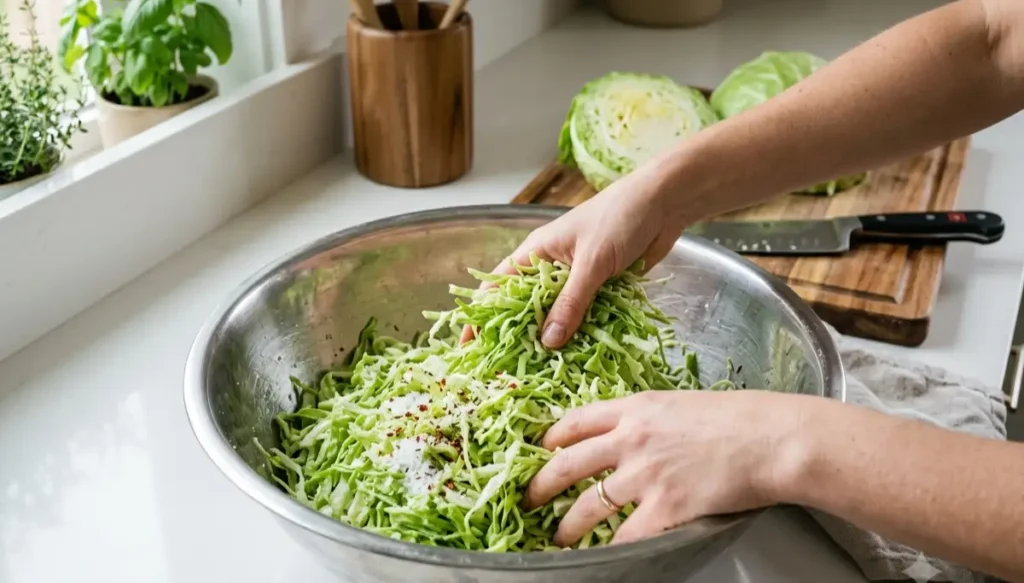
I place the shredded cabbage in a large, clean mixing bowl and distribute the measured salt evenly over it.
Then I use clean hands to massage and squeeze the cabbage for several minutes.
Gradually, the cabbage begins to soften and release liquid. This liquid becomes the natural brine that helps cover the cabbage during fermentation.
If the cabbage needs a little more time to release its juices, I continue massaging it and let it rest briefly before packing.
Step 4: Pack the Cabbage Into a Jar
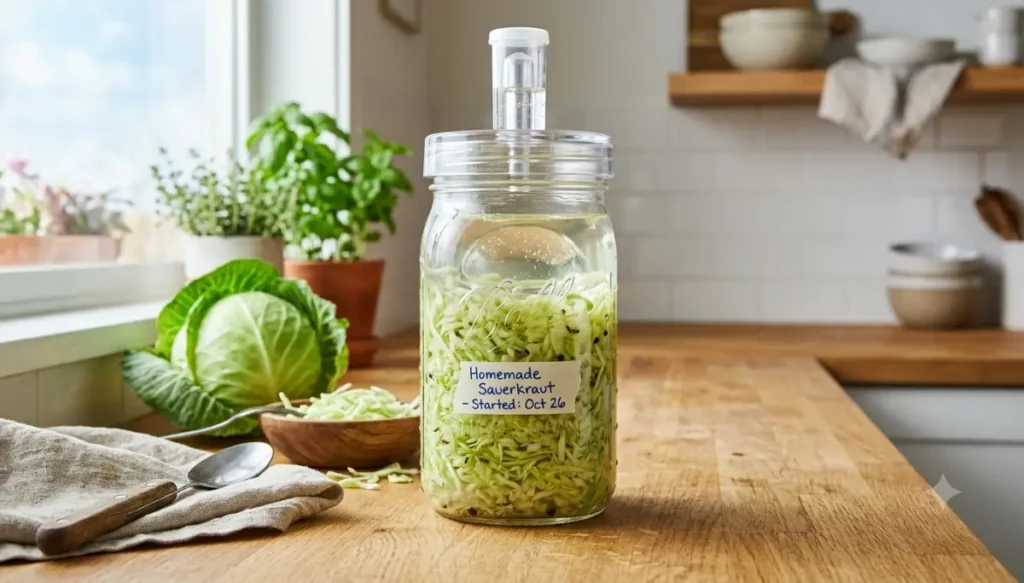
I transfer the salted cabbage into a clean fermentation jar, adding the liquid released in the mixing bowl.
I press the cabbage firmly into the jar with a clean utensil to remove large air pockets and encourage the brine to rise above the shredded cabbage.
I leave enough headspace for the mixture and liquid to expand during fermentation.
The cabbage should remain completely submerged. If the natural liquid does not cover it, use an appropriate boiled-and-cooled salt brine prepared according to a reliable fermentation guide. Do not simply add plain water because that changes the salt concentration.
Step 5: Keep the Cabbage Submerged
I place a suitable fermentation weight on top of the cabbage to keep it below the brine.
This is one of the most important parts of the process. Exposed cabbage can develop unwanted surface growth, so I make sure the shredded vegetable remains under the liquid.
I fit the fermentation lid or suitable cover according to the equipment manufacturer’s instructions. The container must be suitable for fermentation because gas is produced as the cabbage ferments.
I also place the jar on a tray in case some brine escapes.
Step 6: Allow the Cabbage to Ferment
I keep the jar in a clean location away from direct sunlight and monitor the temperature.
For traditional sauerkraut, a temperature around 70–75°F (21–24°C) is commonly recommended. At this temperature, fermentation generally takes about three to four weeks, although the exact timing depends on the conditions. Cooler temperatures can lengthen the process.
During fermentation, I check that the cabbage stays submerged and follow the care instructions for my fermentation lid or container.
Bubbles may appear as fermentation progresses. Their presence or absence alone does not establish that the sauerkraut is safe or fully fermented.
Step 7: Check the Fermentation
After the cabbage has fermented for the appropriate period, I assess whether it has developed the expected tangy flavor and texture.
Properly fermented sauerkraut should have a pleasantly sour smell and a crisp or slightly softened cabbage texture, depending on the conditions.
I never taste the mixture if I notice mold, a slimy texture, or an unpleasant, rotten odor. In those circumstances, I discard it rather than attempting to rescue it.
For a first batch, following a research-tested fermentation procedure is more reliable than depending only on appearance or smell.
Step 8: Refrigerate the Finished Sauerkraut
Once the sauerkraut has completed fermentation according to a reliable method, I transfer it to the refrigerator in a clean, covered container.
I keep the cabbage covered with its brine and use a clean utensil whenever I serve it.
Refrigeration slows fermentation and helps maintain the flavor and texture. If you want to preserve sauerkraut at room temperature for a longer period, use a tested canning procedure rather than assuming fermentation alone makes it shelf-stable.
Read Also: Toad in the Hole Batter Recipe: How to Make Perfect Yorkshire Pudding Batter
My Best Tips for Crunchy Sauerkraut
Choose Fresh, Firm Cabbage
Fresh, firm cabbage is a good starting point for a batch with a pleasant texture. Remove damaged outer leaves before shredding.
Measure Salt by Weight
I recommend using a digital scale instead of estimating salt with a spoon. Salt type and crystal size can affect volume measurements.
Keep Everything Clean
Wash your hands and clean the bowl, jar, utensils, and fermentation weight before starting. Clean equipment reduces the chance of introducing unwanted contamination.
Keep the Cabbage Under Brine
The cabbage should stay submerged throughout fermentation. Check the brine level and follow your container’s instructions.
Avoid Excessive Heat
Fermentation temperature affects texture and timing. Temperatures that are too warm can cause the cabbage to soften, while cooler conditions can slow fermentation.
Simple Ways to Enjoy Sauerkraut
Sauerkraut is versatile enough to accompany many everyday meals.
Serve It With Sausages
Its tangy flavor complements savory sausages and other hearty dishes. A small portion can add contrast to a rich meal.
Add It to Sandwiches
I like the idea of using sauerkraut in sandwiches because its acidity balances ingredients such as cheese and savory fillings.
Use It as a Burger Topping
A little sauerkraut can add texture and tanginess to a homemade burger. Add it shortly before serving to retain its distinctive texture.
Pair It With Roasted Vegetables
Sauerkraut also works well alongside roasted potatoes, carrots, and other vegetables. Its sour flavor can brighten a simple side dish.
How to Store Homemade Sauerkraut
Once fermentation is complete, I store the sauerkraut in a covered container in the refrigerator.
I keep the cabbage submerged in its brine and avoid introducing used utensils or other food into the storage jar.
Properly fermented sauerkraut can keep for several months under refrigeration, although its flavor and texture may gradually change. Storage time depends on the preparation, handling, and refrigeration conditions.
If you want to store it without refrigeration, follow a tested canning process specifically intended for sauerkraut. Do not rely on an ordinary jar lid or a sealed container alone to make it shelf-stable.
Nutrition Information
Sauerkraut is generally low in calories, but its exact nutrition values depend on the cabbage, salt quantity, and serving size.
Estimated Nutrition Table
| Nutrient | Approximate Amount Per 1/2-Cup Serving |
|---|---|
| Calories | 15–25 kcal |
| Carbohydrates | 3–5 g |
| Protein | 1 g |
| Fat | 0 g |
| Fiber | 2–3 g |
| Sodium | Varies; often high |
| Sugar | 1–2 g |
These are general estimates, not laboratory-tested values for this particular batch. Sodium can vary considerably with the recipe and serving size. Sauerkraut is a salty food, so people who need to limit sodium should account for it in their overall diet.
Frequently Asked Questions
What is sauerkraut made of?
Traditional sauerkraut is made with shredded cabbage and salt. The salt draws moisture from the cabbage, creating brine in which fermentation takes place.
How long does homemade sauerkraut take to ferment?
At approximately 70–75°F (21–24°C), fermentation commonly takes around three to four weeks. Cooler conditions can make the process take longer.
Can I make sauerkraut without salt?
I do not recommend removing the salt from a traditional sauerkraut recipe. Salt supports the fermentation process and helps maintain texture and quality. Use a properly tested alternative if you have a specific dietary requirement.
Why is my cabbage not producing enough brine?
Some cabbage releases liquid more slowly than other cabbage. Massage it thoroughly and press it firmly into the jar. If additional liquid is needed, use an appropriate boiled-and-cooled salt brine prepared according to a reliable recipe.
Should sauerkraut be covered with liquid?
Yes. Keep the shredded cabbage submerged beneath the brine during fermentation. Exposed cabbage is more vulnerable to unwanted surface growth.
How do I know when sauerkraut is ready?
Fermentation time, temperature, acidity, and texture all matter. Follow a tested recipe and evaluate the finished product carefully. Do not taste it if you notice mold, sliminess, or a rotten smell.
Can I use red cabbage instead of green cabbage?
Red cabbage can be used to make a sauerkraut-style fermented cabbage. However, use a reliable fermentation procedure and maintain the appropriate salt ratio by weight.
Does homemade sauerkraut need refrigeration?
After fermentation is complete, refrigeration is a convenient way to slow further fermentation and maintain quality. For shelf-stable storage, follow a tested canning procedure.
Can I freeze sauerkraut?
Freezing is an option for longer storage, although it may change the cabbage’s texture after thawing. Store it in a suitable freezer-safe container.
Is homemade sauerkraut always probiotic?
Fermented cabbage may contain live microorganisms when it has not been heat-treated, but the organisms present vary with the fermentation and storage conditions. It is not possible to guarantee a particular probiotic content in every homemade batch.
A Traditional Recipe Worth Making Again
This sauerkraut recipe shows how two simple ingredients can develop a distinctive flavor through traditional fermentation. Fresh cabbage, carefully measured salt, clean equipment, and patience are the essentials I focus on when preparing a batch at home.
I enjoy how versatile sauerkraut can be, whether served beside a hearty meal, added to a sandwich, or used as a tangy topping. Once fermentation is complete, I keep it refrigerated and serve small portions whenever I want to add a little sour crunch to a meal.
If you are trying homemade fermentation for the first time, start with a small batch and follow the salt measurements and food-safety instructions carefully. With the right method, making sauerkraut can be a simple and rewarding kitchen project.
Sauerkraut Recipe: Easy Homemade Fermented Cabbage
Learn how to make homemade sauerkraut with fresh cabbage and salt. This easy fermented cabbage recipe includes simple ingredients, step-by-step instructions, fermentation tips, and storage guidance.
Type: Side Dish
Cuisine: German
Keywords: sauerkraut recipe, homemade sauerkraut, fermented cabbage recipe, easy sauerkraut recipe, how to make sauerkraut
Recipe Yield: 12 servings
Preparation Time: PT20M
Cooking Time: PT0M
Total Time: P28D
Recipe Ingredients:
- 18–23 g non-iodized salt
- 907 g fresh green cabbage
Recipe Instructions:


[…] Read Also: Sauerkraut Recipe: Easy Homemade Fermented Cabbage […]