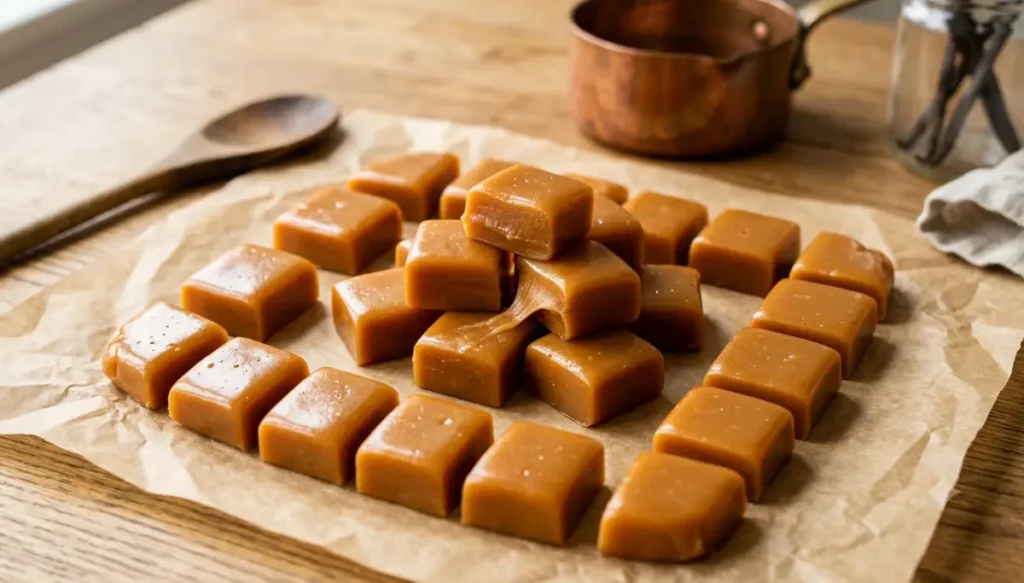
Milton Hershey Historical Caramel Recipe: Long before Milton Hershey became famous for chocolate, his name was already connected with another American candy: caramel. In the 1880s and 1890s, caramel was the product that helped him establish a successful confectionery business, and his Lancaster Caramel Company eventually became a major candy manufacturer.
What makes the story especially interesting to me is that Hershey did not begin with a giant chocolate factory or a famous chocolate bar. His early breakthrough came after he learned to make caramel with fresh milk while working for a confectioner in Denver. He later brought that knowledge back east and built his Lancaster business around milk caramels.
Hi, my name is Om Shinde. I am a chef, and I enjoy discovering recipes that have a story behind them. When I came across the history of Milton Hershey’s caramel, I found it much more fascinating than an ordinary candy recipe because caramel was an important part of Hershey’s early career.
This recipe is my historically inspired homemade interpretation, rather than a claim that I have reproduced a private 1894 factory formula exactly. The modern Milton Hershey’s Caramels sold by Hershey are described by the company as being inspired by the original 1894 recipe.
Recipe Overview
| Detail | Information |
|---|---|
| Prep Time | 10 minutes |
| Cook Time | 25–35 minutes |
| Cooling Time | 2–3 hours |
| Total Time | About 3 hours 45 minutes |
| Cuisine | American |
| Course | Dessert |
| Servings | About 24 caramels |
| Estimated Cost | $7–$10 |
| Difficulty | Intermediate |
| Texture | Soft and chewy |
This recipe requires more attention than a simple cookie or cake because caramel depends heavily on temperature. I recommend preparing all the ingredients before turning on the stove so you can focus completely on the cooking process.
A Recipe With a Surprisingly Big History
Where Milton Hershey’s Caramel Story Began
Milton Hershey learned confectionery skills as a young man in Lancaster, Pennsylvania. After several business setbacks, he traveled to Denver in 1882, where he worked with a confectioner and learned a method for making caramel with fresh milk. That experience became an important turning point in his career.
When Hershey returned to Pennsylvania, he eventually established the Lancaster Caramel Company in 1886. The business started modestly, but a major order for milk caramels helped the company gain momentum. The company expanded rapidly and eventually produced many varieties of confectionery products.
That history is why caramel deserves a special place in the Hershey story. Chocolate eventually became the much bigger chapter, but caramel was the business that helped Milton Hershey build his reputation and fortune.
What Makes This Historical Caramel Special
The defining idea behind this style of caramel is the combination of sugar, dairy, butter, and controlled heat.
Modern caramel recipes can use many different techniques and ingredients, but the basic science remains fascinating. Sugar changes dramatically as it is heated, while dairy and butter add richness and help create the soft, chewy texture associated with milk caramel.
Hershey’s own history emphasizes his early experience making caramels with fresh milk. The company later became famous for applying his knowledge of dairy processing to milk chocolate as well.
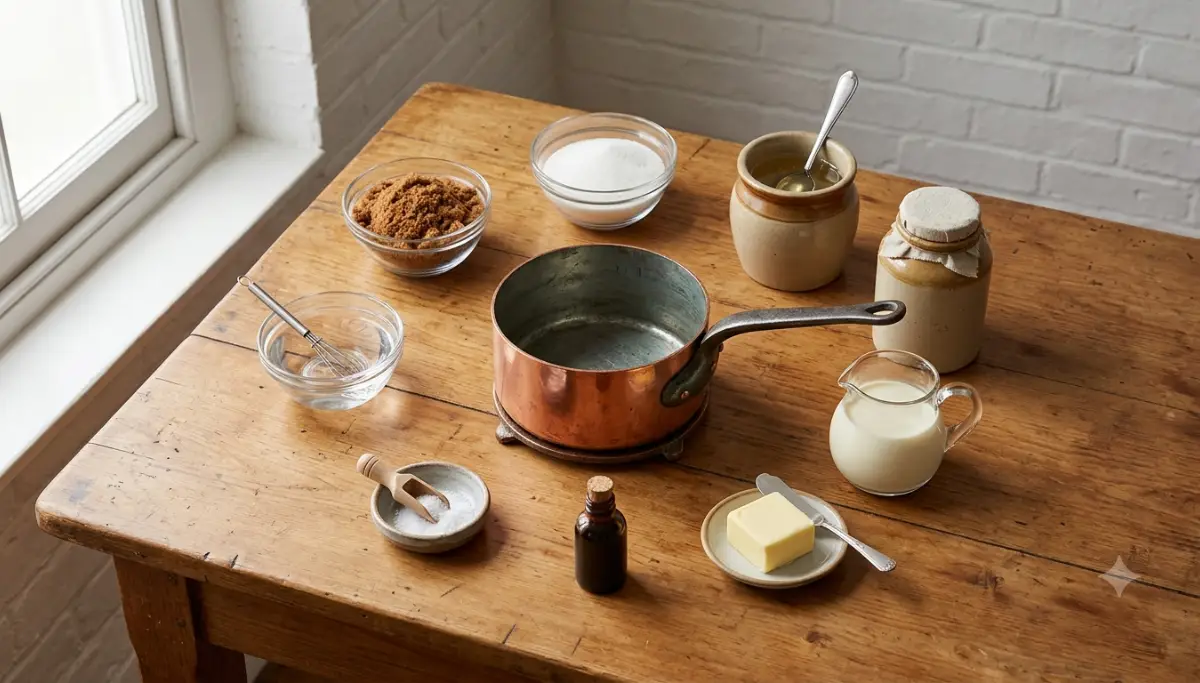
Ingredients I Use for the Historical-Inspired Version
| Ingredient | Quantity | Notes |
|---|---|---|
| Sweetened condensed milk | 14 oz | 1 standard can |
| Heavy cream | 1 cup | Full-fat |
| Unsalted butter | 6 tbsp | Cut into pieces |
| Brown sugar | 1 cup | Packed |
| Granulated sugar | 1/2 cup | Regular white sugar |
| Corn syrup | 1/2 cup | Helps reduce crystallization |
| Vanilla extract | 1 tsp | Added at the end |
| Fine salt | 1/2 tsp | Balances sweetness |
| Water | 2 tbsp | Helps start the sugar syrup |
The ingredient combination is inspired by the modern description of Milton Hershey’s Caramels, which lists sweetened condensed milk, heavy cream, butter, and brown sugar among its ingredients.
I have added a few practical ingredients commonly used in modern caramel-making to make a homemade version easier to control. This should therefore be treated as a historical-style recipe inspired by Hershey’s caramel tradition, not as a verified transcription of an original factory formula.
The Equipment That Makes a Difference
| Equipment | Purpose |
|---|---|
| Heavy-bottom saucepan | Cooking caramel evenly |
| Candy thermometer | Checking temperature |
| Wooden spoon or heatproof spatula | Stirring |
| 8-inch square pan | Setting the caramel |
| Parchment paper | Lining the pan |
| Pastry brush | Cleaning sugar crystals |
| Sharp knife | Cutting finished caramel |
| Heatproof measuring cup | Handling hot mixture |
A candy thermometer is the most useful tool here. Without one, it is possible to make caramel, but getting the exact texture becomes much more difficult.
Before the Sugar Hits the Pan
Prepare the Pan First
I begin by lining an 8-inch square baking pan with parchment paper. I leave some paper hanging over the sides so I can lift the finished caramel out easily.
I lightly grease the parchment with butter. This small step makes cutting and removing the caramel much easier later.
Measure Everything Before Cooking
Caramel is not the kind of recipe where I want to stop halfway through cooking to measure an ingredient.
I measure the condensed milk, cream, butter, sugars, corn syrup, salt, and vanilla before starting. Once the mixture becomes hot, everything needs to be ready.
My Method for Making Soft Chewy Caramel
Step 1: Combine the Sugar Ingredients
I place the brown sugar, granulated sugar, corn syrup, and water into a heavy-bottom saucepan.
I heat the mixture over medium heat and stir gently until the sugars dissolve.
At this stage, I am looking for a smooth syrup rather than a rapidly boiling mixture.
Step 2: Add the Dairy and Butter
Once the sugar has dissolved, I slowly add the condensed milk and heavy cream.
I then add the butter and continue stirring.
The mixture will look pale and creamy at first, but that will change as the temperature rises.
Step 3: Start Cooking the Caramel
I keep the heat around medium and stir regularly.
This is the part where patience matters. I do not want the bottom of the pan to scorch while the rest of the mixture is still cooking.
The caramel will gradually become thicker and darker as moisture evaporates and the sugars continue cooking.
Step 4: Watch the Temperature Carefully
I attach the candy thermometer to the side of the saucepan.
For a soft and chewy caramel, I cook the mixture until it reaches approximately 245–248°F (118–120°C).
The exact final texture can vary depending on ingredients, pan size, humidity, and cooking conditions, so I treat the temperature as a guide rather than relying on appearance alone.
Step 5: Keep Stirring
As the caramel thickens, I stir more frequently.
The mixture becomes heavier, and the bubbles become slower and thicker. This is a good sign that the water content is decreasing.
I stay close to the pan during this stage because caramel can change quickly near the final temperature.
Step 6: Add Vanilla and Salt
Once the caramel reaches the target temperature, I remove the saucepan from the heat.
I carefully stir in the vanilla extract and salt.
The mixture will be extremely hot, so I avoid tasting it at this stage.
Step 7: Pour Into the Prepared Pan
I immediately pour the hot caramel into the parchment-lined pan.
I do not scrape aggressively against the bottom of the saucepan if I see any darker or potentially overcooked material.
I gently smooth the surface with a heatproof spatula.
Step 8: Let It Cool Completely
I leave the caramel at room temperature until it becomes firm enough to cut.
Depending on the temperature of the room, this can take several hours.
I avoid putting extremely hot caramel directly into the refrigerator because sudden temperature changes can affect texture.
Step 9: Cut Into Pieces
Once completely set, I lift the caramel out using the parchment paper.
I lightly grease a sharp knife and cut it into small squares.
If the caramel sticks, I wipe the knife clean and lightly grease it again between cuts.
Read Also: Peggy Goldschmidt Cookie Recipe: The Buttery Family Classic
The Little Details That Control the Texture
Caramel can be surprisingly sensitive.
If I stop cooking too early, the finished candy may remain too soft and sticky. If I cook it too far, it can become firm and difficult to chew.
That is why temperature is more reliable than color alone. A golden-brown appearance can look beautiful, but it does not tell me precisely how much moisture remains in the candy.
I also pay attention to the saucepan. A heavy-bottomed pan distributes heat more evenly and reduces the chance of burning the dairy and sugar mixture.
How I Keep Homemade Caramels Soft
Use Airtight Storage
After cutting, I wrap individual caramel pieces in wax paper or parchment paper.
I then place them in an airtight container.
This protects them from moisture and helps maintain their chewy texture.
Keep Them at Room Temperature
For short-term storage, I prefer keeping wrapped caramels in a cool, dry place.
Very warm conditions can make them sticky and difficult to handle.
If your kitchen is particularly hot, refrigeration can help, although chilled caramel will become firmer.
Easy Ways to Give the Caramel a Modern Twist
Add Sea Salt
A tiny sprinkle of flaky sea salt on top creates a sweet-and-salty contrast.
I recommend adding it immediately after pouring the hot caramel into the pan so it sticks to the surface.
Dip in Chocolate
Once the caramel has completely cooled, you can dip individual pieces in melted chocolate.
This creates a modern combination that also feels appropriate considering the later direction of Milton Hershey’s career.
Add Chopped Nuts
Finely chopped pecans or roasted peanuts can be mixed into the caramel before it sets.
I prefer keeping the amount moderate so the chewy caramel remains the main attraction.
The Interesting Link Between Caramel and Hershey Chocolate
Milton Hershey’s caramel career eventually led directly toward chocolate.
After seeing German chocolate-making machinery at the 1893 World’s Columbian Exposition in Chicago, Hershey purchased equipment and began experimenting with chocolate. In 1894, the Hershey Chocolate Company was established as a subsidiary of his caramel business.
By 1900, Hershey sold the Lancaster Caramel Company for $1 million and shifted his attention toward chocolate. He retained the Hershey Chocolate Company and continued developing his chocolate business.
That makes this caramel recipe more than just an old-fashioned candy. It represents an earlier chapter of the story that eventually became one of America’s most recognizable chocolate businesses.
Nutrition Information
The following values are approximate and will vary depending on the exact ingredients and portion size.
| Nutrient | Approx. Per Caramel |
|---|---|
| Calories | 100–125 kcal |
| Carbohydrates | 17–20 g |
| Protein | 1–2 g |
| Fat | 4–6 g |
| Saturated Fat | 2–4 g |
| Sugar | 14–18 g |
| Sodium | 35–70 mg |
| Calcium | Moderate |
These figures are estimates and should not be treated as laboratory-tested nutrition information. Cutting the batch into larger or smaller pieces will also change the nutritional value per serving.
Frequently Asked Questions
Did Milton Hershey invent caramel?
No. Caramel existed long before Milton Hershey. His importance to caramel history comes from his development and commercialization of milk caramels, which became the foundation of his successful Lancaster Caramel Company.
What kind of caramel did Milton Hershey make?
Hershey became known for caramels made with fresh milk. His experience learning this technique in Denver became an important part of his later confectionery career.
Is this the exact original 1894 Milton Hershey caramel recipe?
No. I would not describe this as a verified transcription of the original factory formula. It is a historical-inspired homemade version based on documented information about Hershey’s caramel tradition and the ingredients associated with the modern Milton Hershey’s Caramels product.
Hershey currently describes its Milton Hershey’s Caramels as being inspired by the original 1894 recipe.
Why is my caramel too soft?
The most common reason is that the mixture did not reach a sufficiently high final temperature. Too much remaining moisture can leave caramel soft and sticky.
Why did my caramel become too hard?
Cooking the mixture too far can remove too much moisture and produce a firmer candy. A reliable candy thermometer can help prevent overcooking.
Can I make this caramel without a candy thermometer?
Yes, but I recommend using one if possible. Caramel texture depends heavily on temperature, and a thermometer makes the process much more predictable.
Can I add sea salt?
Yes. A small amount of flaky sea salt can provide a pleasant contrast to the sweetness.
How long can homemade caramel be stored?
Properly wrapped caramels can generally be kept for several weeks in a cool, dry place. Keep them airtight and away from excessive heat or humidity.
Can I dip these caramels in chocolate?
Yes. After the caramel has completely cooled and been cut, you can dip the pieces in melted chocolate for a richer candy.
Why is Milton Hershey associated with caramel when he became famous for chocolate?
Caramel was actually a major part of Hershey’s early business success. He founded the Lancaster Caramel Company in 1886, and the company grew into a significant confectionery operation before he sold it in 1900 and concentrated on chocolate.
A Sweet Recipe With a Bigger Story
What I find most interesting about this caramel is not simply the finished candy. It is the story behind it.
Before the chocolate bars, factories, and famous Pennsylvania town, there was a young confectioner learning how heat, milk, sugar, and patience could transform simple ingredients into something people wanted to buy.
Milton Hershey’s caramel business became an important foundation for everything that followed. The modern version may use updated manufacturing and ingredients, but the idea of a rich, soft milk caramel still offers a small taste of that earlier chapter.
If you enjoy historical recipes, homemade candy, or simply want to try something connected to the early Hershey story, this caramel is a fun recipe to make slowly and carefully.
Milton Hershey Historical Caramel Recipe: A Sweet Taste of the 1890s
A historically inspired homemade caramel recipe made with butter, cream, condensed milk, brown sugar, and vanilla, inspired by the caramel tradition associated with Milton Hershey.
Type: Dessert
Cuisine: American
Keywords: Milton Hershey caramel recipe, historical caramel recipe, old fashioned caramel recipe, homemade caramel, soft caramel recipe, chewy caramel recipe, Lancaster caramel recipe
Recipe Yield: 110 24 caramels
Calories: 110 calories
Preparation Time: PT10M
Cooking Time: PT35M
Total Time: PT3H45M
Recipe Ingredients:
- 14 oz sweetened condensed milk
- 1 cup heavy cream
- 6 tablespoons unsalted butter
- 1 cup packed brown sugar
- 1/2 cup granulated sugar
- 1/2 cup light corn syrup
- 2 tablespoons water
- 1 teaspoon vanilla extract
- 1/2 teaspoon fine salt
Recipe Instructions: Line an 8-inch square baking pan with parchment paper and lightly grease it. In a heavy-bottomed saucepan, combine the brown sugar, granulated sugar, corn syrup, and water. Add the sweetened condensed milk, heavy cream, and butter, then cook the mixture over medium heat while stirring continuously with a heatproof spatula or wooden spoon. Continue cooking until the caramel thickens and reaches approximately 245–248°F (118–120°C) on a candy thermometer. Remove the pan from the heat and carefully stir in the vanilla extract and salt. Pour the hot caramel into the prepared pan and spread it evenly. Allow the caramel to cool completely until firm, then remove it from the pan and cut it into 24 bite-sized pieces. Serve immediately or wrap the individual caramels for storage.