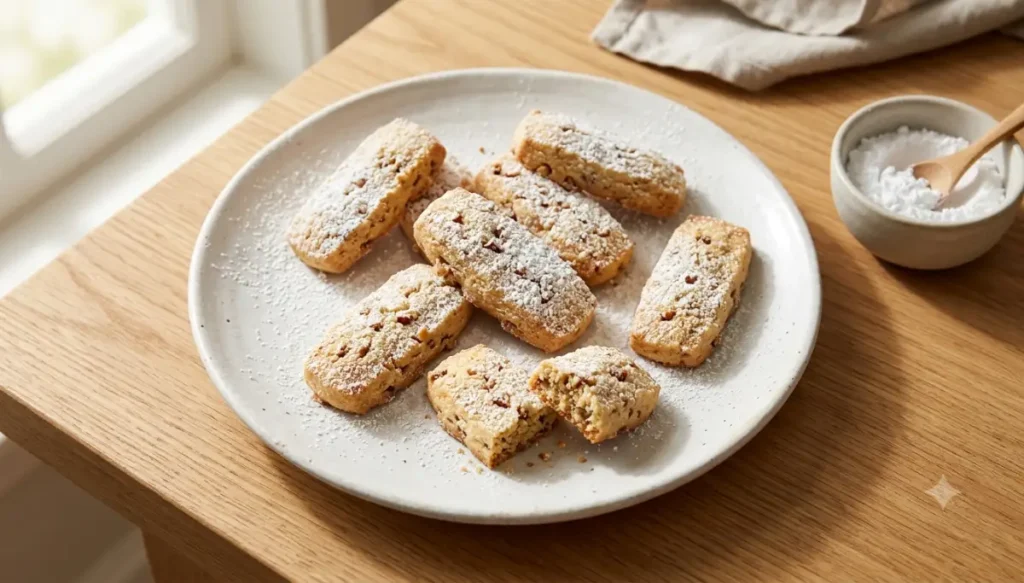
Some cookie recipes become popular because they look impressive, while others stay special because people keep making them year after year. The Peggy Goldschmidt Cookie Recipe belongs to the second kind. Peggy Goldschmidt’s family calls these buttery shortbread-style cookies Butter Fingers, and the recipe has become a memorable family favorite. A recent feature says Peggy, now 92, has made the recipe an extraordinary number of times, while her family continues to make it during the holidays.
What makes these cookies interesting to me is how uncomplicated they are. There is no elaborate frosting, no complicated filling, and no long ingredient list. The dough is built around butter, flour, finely chopped pecans, confectioners’ sugar, and vanilla, with a little water helping bring everything together. The finished cookies are shaped like small fingers, baked until lightly golden, and rolled in powdered sugar.
Hi, my name is Om Shinde. I am a chef, and I enjoy experimenting with simple homemade recipes that feel comforting and practical. I especially like old-fashioned recipes because they often prove that you do not need dozens of ingredients to create something memorable. This cookie is exactly that kind of recipe.
Recipe Overview
| Detail | Information |
|---|---|
| Prep Time | 20 minutes |
| Chill Time | 0 minutes |
| Cook Time | 10–12 minutes |
| Total Time | About 35 minutes |
| Cuisine | American |
| Course | Dessert |
| Servings | About 36 cookies |
| Estimated Cost | $7–$10 |
| Difficulty | Easy |
| Best For | Holidays, snacks, gifting |
The original recipe uses three sticks of softened butter, three cups of all-purpose flour, one cup of finely chopped pecans, six tablespoons of confectioners’ sugar plus additional sugar for coating, one teaspoon of vanilla extract, and one teaspoon of water. The cookies are baked at 400°F for approximately 10–12 minutes.
Why These Cookies Feel So Old-Fashioned
There is something wonderfully simple about a cookie that depends mostly on butter, flour, and nuts for its character. Peggy Goldschmidt’s Butter Fingers do not try to hide behind elaborate decorations. Their appeal comes from the texture and the contrast between the buttery cookie and the delicate layer of powdered sugar.
The pecans are another important detail. Finely chopped pecans add a gentle nutty flavor and a little texture to the shortbread-like dough. According to the recent feature, the pecans also give the recipe a Southern touch, while the cookie’s finger shape and overall style have similarities to Central European cookies such as Russian tea cakes and German crescent cookies.
What I Love About the Ingredient List
Butter Creates the Rich Foundation
Butter is the main flavor in these cookies, so I would not treat it as a background ingredient. Using properly softened butter helps the ingredients combine evenly and gives the finished cookies their rich, tender character.
I recommend allowing the butter to soften naturally rather than melting it. Melted butter changes the dough consistency and can make shaping more difficult.
Pecans Bring the Signature Crunch
Finely chopped pecans are what make these cookies different from a basic shortbread.
I like chopping them fairly fine rather than leaving large pieces. Smaller pieces distribute more evenly through the dough, so each cookie gets some nutty flavor without making the cookie difficult to shape.
Powdered Sugar Finishes Everything
Confectioners’ sugar serves two purposes here. Some goes into the dough, while additional powdered sugar is used to coat the baked cookies.
That final coating is what gives Butter Fingers their recognizable snowy appearance and adds a delicate sweetness to the buttery cookie.
Ingredients You’ll Need
| Ingredient | Quantity | Notes |
|---|---|---|
| Butter | 3 sticks | Softened |
| All-purpose flour | 3 cups | Sifted if desired |
| Finely chopped pecans | 1 cup | Chop finely |
| Confectioners’ sugar | 6 tablespoons | Plus extra for coating |
| Vanilla extract | 1 teaspoon | Pure vanilla preferred |
| Water | 1 teaspoon | Helps bring dough together |
The original published recipe uses these six ingredients, with additional confectioners’ sugar for rolling the finished cookies.
A Few Tools Make the Job Easier
| Equipment | Purpose |
|---|---|
| Large mixing bowl | Making the dough |
| Measuring cups | Measuring dry ingredients |
| Measuring spoons | Measuring small quantities |
| Wooden spoon or mixer | Combining ingredients |
| Baking sheet | Baking cookies |
| Parchment paper | Preventing sticking |
| Knife or food chopper | Chopping pecans |
| Cooling rack | Cooling baked cookies |
| Small bowl | Holding powdered sugar |
You do not need a stand mixer to make this recipe. A sturdy mixing bowl and wooden spoon can work, although an electric mixer makes combining softened butter and the other ingredients easier.
My Step-by-Step Method
Step 1: Get the Butter Ready
I start by bringing the butter to room temperature.
The butter should be soft enough to mix but should not be melted or oily. This makes it easier to combine the ingredients into a consistent dough.
If the butter is too cold, the dough can become difficult to work with. If it is melted, the dough may become unnecessarily soft.
Step 2: Prepare the Pecans
Next, I finely chop the pecans.
I prefer using a knife or food chopper and stopping when the pieces are small but still visible. I do not turn them into a paste because the cookies benefit from having tiny pieces of pecan throughout the dough.
This step also helps the nut flavor spread evenly across the batch.
Step 3: Build the Dough
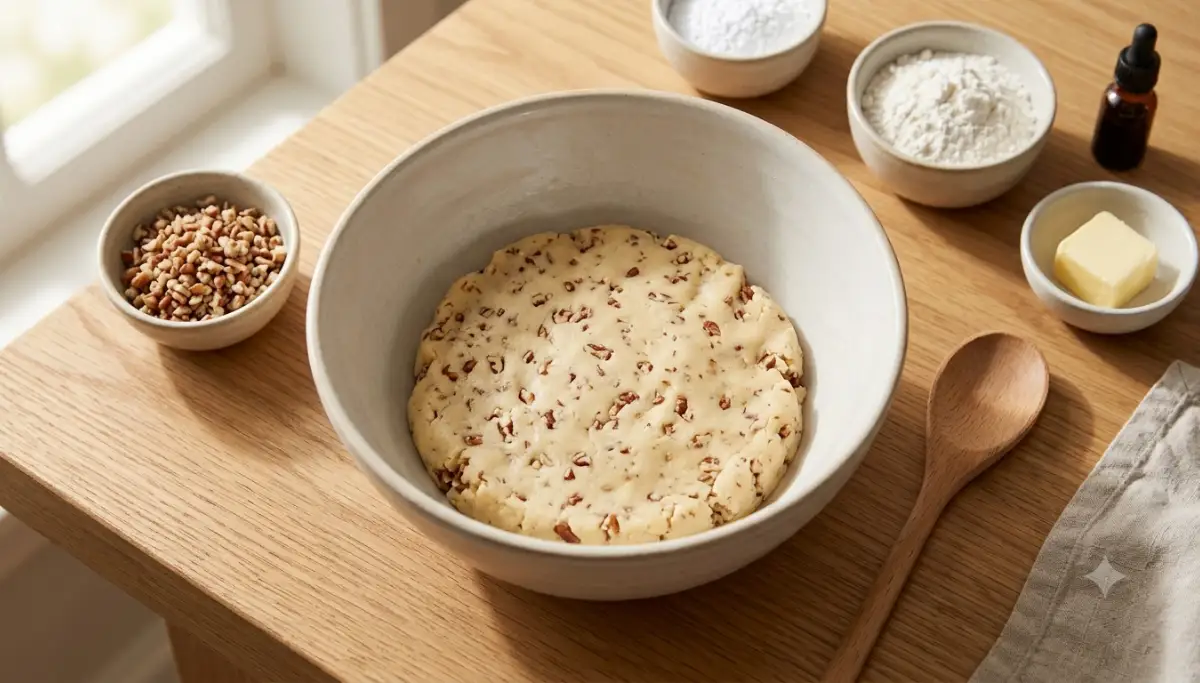
I combine the softened butter, flour, finely chopped pecans, confectioners’ sugar, vanilla extract, and water in a large mixing bowl.
I mix everything until a cohesive dough forms.
The dough should hold together when pressed. If it seems crumbly at first, I continue mixing gently rather than immediately adding extra liquid.
Step 4: Shape the Cookies
This is the part that gives the recipe its personality.
I take small portions of dough and roll them into short logs or finger-shaped pieces. The published recipe recommends shaping them into fingers about 2.5 inches long.
I try to keep the pieces reasonably similar in size so they bake at approximately the same rate.
Step 5: Prepare the Baking Sheet
I line a baking sheet with parchment paper.
Then I arrange the shaped cookies with enough space between them for easy handling. Because these cookies are relatively small, they do not require an enormous amount of room, but I still avoid overcrowding the tray.
Step 6: Bake Until Lightly Golden
I preheat the oven to 400°F.
The cookies bake for approximately 10–12 minutes, according to the published recipe. I watch the edges carefully because the goal is a lightly golden cookie rather than a deeply browned one.
Every oven behaves slightly differently, so I use the color and texture as additional guides.
Step 7: Give Them a Short Rest
Once the cookies come out of the oven, I let them cool slightly.
They will still be delicate when they are very hot, so I handle them carefully. Allowing them to rest briefly makes them easier to move and coat without breaking.
Step 8: Roll Them in Powdered Sugar
While the cookies are still slightly warm, I gently roll them in confectioners’ sugar.
The powdered sugar sticks to the surface and creates the classic snowy finish.
I like using a generous but even coating. After the cookies cool completely, an additional light dusting can make them look even more attractive.
Read Also: Sandra Bullock’s Mother Helga Cake Recipe
The Trick to Keeping the Texture Right
The biggest thing I pay attention to with these cookies is texture.
Because they are shortbread-style cookies, I do not want to overwork the dough. Too much mixing can affect the final texture, while properly combined dough produces a more delicate bite.
I also make sure the pecans are finely chopped. Large nut pieces can make the small finger-shaped cookies harder to shape and can create uneven textures.
Most importantly, I keep an eye on the oven. A cookie that stays in the oven too long can lose the delicate buttery character that makes this recipe appealing.
Why the Finger Shape Matters
At first glance, shaping the cookies like fingers may seem like a simple presentation choice, but it is actually part of what makes the recipe distinctive.
The published feature notes that the finger shape gives the cookies more surface area than rounded versions, contributing to a particularly crisp exterior.
I also think the shape makes them especially nice for serving. Instead of looking like an ordinary round cookie, they have a recognizable homemade appearance that feels connected to an older family recipe.
Easy Ways to Make the Recipe Your Own
Try a Different Nut
Pecans are central to the original character, but walnuts can be used if pecans are unavailable.
The flavor will change slightly, but the buttery cookie base will still remain the main feature.
Add a Little Extra Vanilla
If you enjoy a stronger vanilla flavor, you can slightly increase the vanilla extract.
I would keep the amount modest because too much vanilla can overpower the delicate butter and pecan combination.
Make Them Extra Snowy
For a more pronounced powdered-sugar finish, I like giving the cooled cookies a second very light coating.
This also makes them look beautiful when arranged on a serving plate or packed into a gift tin.
How I Like to Serve These Cookies
These cookies are particularly suited to holiday gatherings, afternoon coffee, and homemade gifting.
I like serving them alongside coffee or tea because the buttery texture and powdered sugar work naturally with a warm drink.
They can also be arranged on a dessert platter with other small cookies. Their simple appearance makes them easy to combine with more decorated holiday treats without competing for attention.
The family story surrounding the recipe also makes it especially appropriate for gatherings where traditional or nostalgic food is part of the occasion. The recent feature describes the Goldschmidt family treating the cookies as an important holiday tradition.
Storage Tips for a Buttery Batch
Once the cookies have cooled completely, I store them in an airtight container.
A sheet of parchment paper between layers helps protect the powdered-sugar coating and keeps the cookies from rubbing against one another.
For the best texture, I prefer keeping them in a cool, dry place rather than exposing them to heat or humidity.
If you are making them for a holiday gathering, preparing them ahead of time can be convenient because the cookies are easy to store and serve.
Nutrition Information
The exact nutrition values will depend on the final cookie size and the amount of powdered sugar used for coating. Since the published recipe does not provide laboratory-tested nutrition information, the following figures should be treated only as a rough estimate.
Approximate Nutrition Per Cookie
| Nutrient | Estimated Amount |
|---|---|
| Calories | 130–160 kcal |
| Carbohydrates | 11–15 g |
| Protein | 1–2 g |
| Fat | 9–11 g |
| Saturated Fat | 5–7 g |
| Sugar | 3–5 g |
| Fiber | 1 g |
| Sodium | 50–90 mg |
The actual values will vary depending on the size of each cookie and how much powdered sugar sticks to the outside.
Frequently Asked Questions
What is the Peggy Goldschmidt Cookie Recipe?
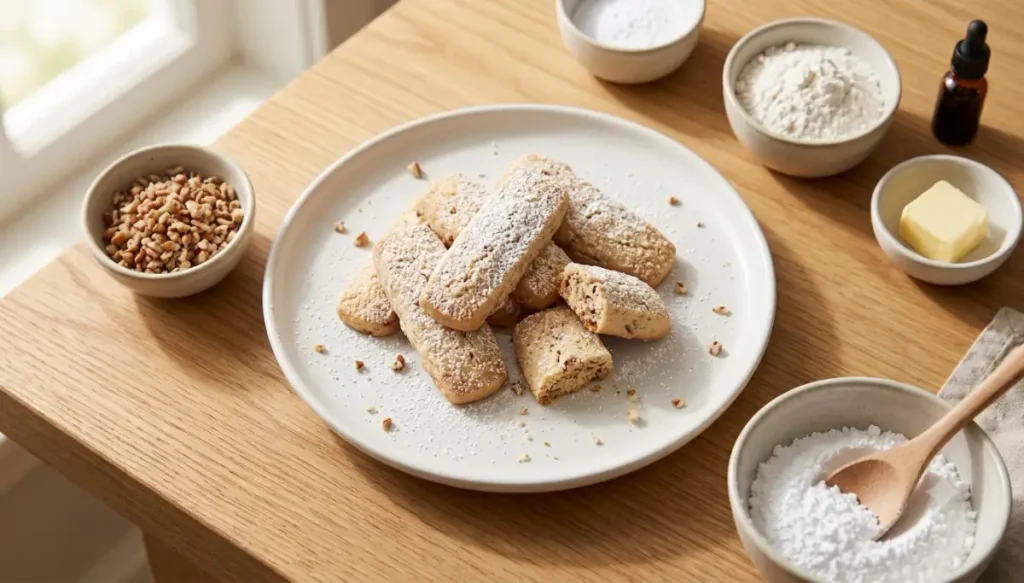
The recipe is a buttery pecan shortbread-style cookie known within the Goldschmidt family as Butter Fingers. The cookies are shaped into small fingers, baked until lightly golden, and coated in confectioners’ sugar.
Why are they called Butter Fingers?
The Goldschmidt family uses the name Butter Fingers for these finger-shaped buttery cookies. Their elongated shape is one of the recipe’s recognizable features.
How many ingredients are in the recipe?
The core recipe uses five main ingredients—butter, flour, pecans, confectioners’ sugar, and vanilla—with a small amount of water used to help bring the dough together.
Do I need to chill the dough?
The published method does not require a separate dough-chilling step. The dough is mixed, shaped, and baked.
Can I use walnuts instead of pecans?
Yes. Walnuts can be substituted, although the flavor will be somewhat different. Pecans provide the characteristic nutty flavor associated with this version.
Why should the pecans be finely chopped?
Finely chopped pecans distribute more evenly through the dough and make the small finger-shaped cookies easier to shape.
Why do the cookies need powdered sugar after baking?
The powdered sugar creates the classic sweet coating and gives the cookies their distinctive snowy appearance.
How long should I bake Butter Fingers?
The published recipe recommends baking them at 400°F for approximately 10–12 minutes, or until they become lightly brown.
Can I make these cookies for Christmas?
Yes. The Goldschmidt family describes them as an important Christmas tradition, making them particularly suitable for holiday cookie trays and gifting.
How should I store these cookies?
After completely cooling them, store the cookies in an airtight container in a cool, dry place. Parchment between layers can help protect their powdered-sugar coating.
A Cookie That Feels Like It Belongs in a Family Recipe Box
The Peggy Goldschmidt Cookie Recipe is interesting not because it uses unusual ingredients, but because it shows how a simple recipe can become part of a family’s identity.
The combination of butter, pecans, flour, vanilla, and powdered sugar creates a cookie that feels old-fashioned in the best possible way. The distinctive finger shape adds character, while the final sugar coating gives every piece a delicate finish.
What I like most about this recipe is that it feels achievable. I do not need professional baking equipment or complicated decorating skills. I can prepare the dough, shape the little fingers, bake them until lightly golden, and finish them with powdered sugar.
If you enjoy traditional cookies, buttery shortbread, or pecan desserts, these Butter Fingers are a recipe worth adding to your baking list. The Goldschmidt family’s long-standing connection to them is a reminder that sometimes the recipes people remember most are the ones that were made simply, shared generously, and repeated for years.
Peggy Goldschmidt Cookie Recipe: Buttery Pecan Butter Fingers
Learn how to make Peggy Goldschmidt’s buttery pecan Butter Fingers, a simple old-fashioned cookie made with butter, flour, pecans, vanilla, and powdered sugar.
Type: Dessert
Cuisine: American
Keywords: Peggy Goldschmidt cookie recipe, Peggy Goldschmidt Butter Fingers, Butter Fingers cookie recipe, pecan finger cookies, buttery pecan cookies, powdered sugar cookies, old fashioned pecan cookies
Recipe Yield: About 30 cookies
Calories: 150 calories per cookie
Preparation Time: PT15M
Cooking Time: PT12M
Total Time: PT27M
Recipe Ingredients:
- 3 cups all-purpose flour
- 3 sticks butter, softened
- 1 cup finely chopped pecans
- 6 tablespoons confectioners’ sugar
- plus more for rolling
- 1 teaspoon water
- 1 teaspoon vanilla extract
Recipe Instructions: Preheat the oven to 400°F and line a cookie sheet with parchment paper. Mix the softened butter, flour, finely chopped pecans, confectioners’ sugar, vanilla extract, and water to form a soft dough. Roll the dough into small balls, then shape each piece into a finger about 2.5 inches long. Arrange the shaped cookies on the prepared baking sheet. Bake for 10 to 12 minutes, or until the cookies are lightly golden brown. Allow the cookies to cool slightly, then roll them generously in confectioners’ sugar. Let the cookies cool completely before serving.