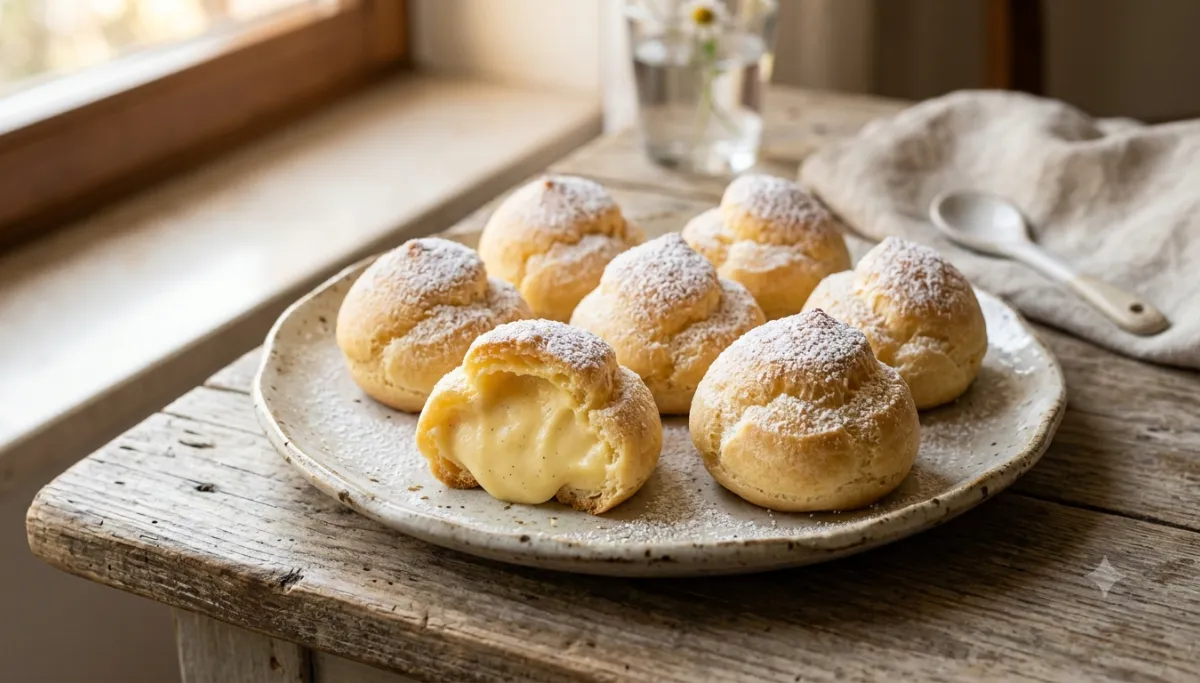
Tette delle Monache Recipe: Tette delle Monache is a delicate Italian pastry known for its soft, airy texture and creamy filling. The name literally translates to “nun’s breasts,” referring to the rounded shape of the pastries. This traditional sweet is particularly associated with the southern Italian region of Puglia and is often linked with the city of Altamura.
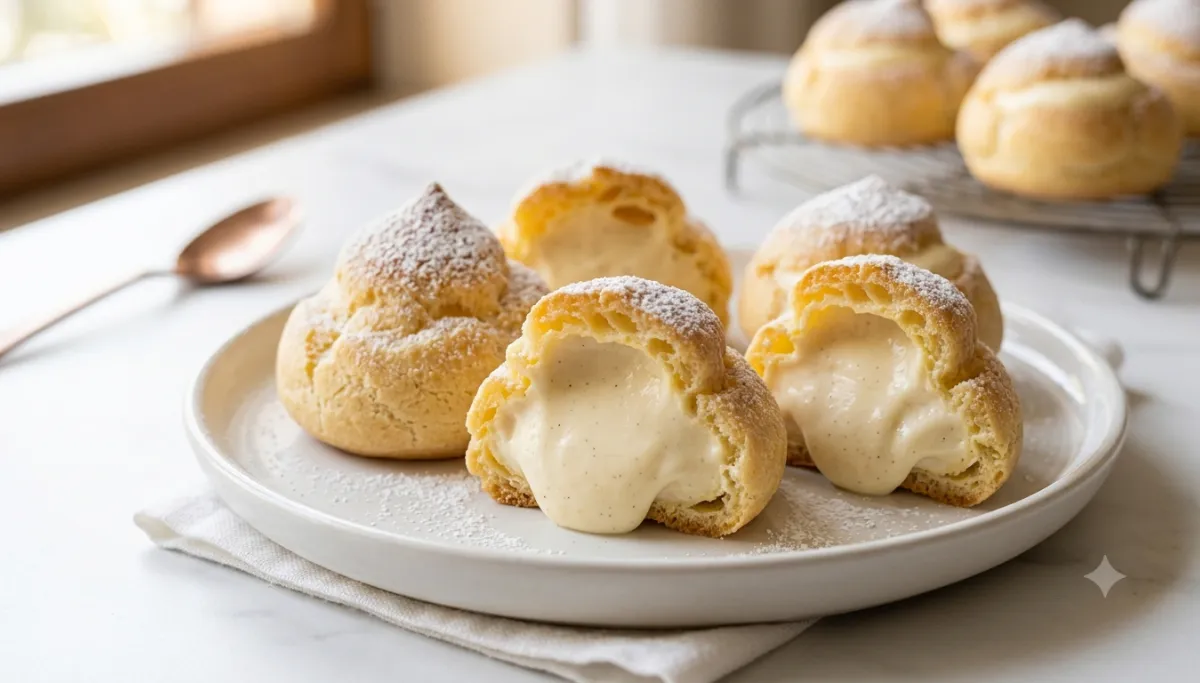
What I find most interesting about this dessert is its appearance. From the outside, it looks simple and almost too delicate to be a special dessert, but when I cut one open and see the generous layer of cream inside, it becomes much more tempting. The pastry is light rather than heavy, which makes it different from many rich cream-filled desserts.
Hi, my name is Om Shinde. I am a chef, and I enjoy experimenting with traditional recipes and bringing them into my own kitchen. I especially like recipes that use simple ingredients but still create an impressive final result. When I first explored Tette delle Monache, I was fascinated by the combination of a soft sponge-like shell and creamy filling.
This homemade version focuses on the texture and technique that make this Italian pastry special while keeping the method practical for a home kitchen.
Recipe Overview
| Detail | Information |
|---|---|
| Prep Time | 25 minutes |
| Cook Time | 15–20 minutes |
| Cooling Time | 30 minutes |
| Filling Time | 10 minutes |
| Total Time | About 1 hour 20 minutes |
| Cuisine | Italian |
| Region | Puglia |
| Course | Dessert |
| Servings | 8 pastries |
| Estimated Cost | $8–$12 |
| Difficulty | Moderate |
| Best Served | Chilled or slightly cool |
Tette delle Monache requires a little more attention than a basic cupcake or sponger cake because the shape and texture of the pastry are important. However, once the batter is prepared correctly, the actual baking process is quite straightforward.
What Are Tette delle Monache?
Tette delle Monache are small, rounded Italian pastries made from a light sponge-like batter and traditionally filled with a soft cream. They are particularly associated with Puglia, where this type of pastry has become a recognizable part of local sweet-making traditions.
The exterior is usually pale and delicate, while the interior is soft and airy. After baking, the pastry is filled with cream, giving it a pleasant contrast between the light outer layer and rich center.
The name may sound unusual to people unfamiliar with Italian desserts, but the shape explains the traditional name. I would describe the pastry as playful in appearance but elegant in texture.
One of the reasons I wanted to make this recipe is that it demonstrates how technique can be more important than using a huge number of ingredients.
Why I Love This Dessert
I enjoy Tette delle Monache because it does not feel excessively heavy. The sponge is light, and the cream filling adds richness without completely overpowering the pastry.
Another thing I like is its presentation. Each pastry looks attractive without requiring complicated decoration. A simple dusting of powdered sugar can be enough to make it look ready for a dessert table.
It is also a great recipe for anyone who enjoys Italian pastries but wants to try something less common than tiramisu, cannoli, or panna cotta.
The Ingredients I Use
| Ingredient | Quantity | Notes |
|---|---|---|
| Eggs | 4 large | Room temperature |
| Granulated sugar | 100 g | Fine sugar works best |
| All-purpose flour | 100 g | Sifted |
| Potato starch | 30 g | Helps create a lighter texture |
| Vanilla extract | 1 tsp | For flavor |
| Lemon zest | 1 tsp | Optional |
| Salt | Small pinch | Balances sweetness |
| Heavy cream | 1 cup | Cold |
| Powdered sugar | 2 tbsp | For cream |
| Vanilla extract | 1/2 tsp | For filling |
| Powdered sugar | As needed | For finishing |
The basic pastry mixture is intentionally simple. Eggs provide structure and airiness, while flour and potato starch create the delicate sponge texture.
I recommend using room-temperature eggs because they generally whip more easily and can help create a lighter batter.
The Equipment I Keep Ready
| Equipment | Purpose |
|---|---|
| Large mixing bowl | Preparing batter |
| Electric hand mixer | Whipping eggs and sugar |
| Fine sieve | Sifting dry ingredients |
| Spatula | Folding batter |
| Piping bag | Shaping pastries |
| Baking tray | Baking |
| Parchment paper | Preventing sticking |
| Wire rack | Cooling |
| Large bowl | Preparing cream |
| Small spoon or piping bag | Filling pastries |
A piping bag is particularly useful because the characteristic rounded shape is easier to create when the batter is piped rather than spooned onto the tray.
The Most Important Part: Making the Light Batter
Step 1: Prepare the Oven
I begin by preheating my oven to 350°F or approximately 175°C.
I line a baking tray with parchment paper. Preparing the tray before mixing the batter is important because the whipped egg mixture should be used fairly quickly once it is ready.
Step 2: Whip the Eggs and Sugar
I place the eggs and granulated sugar into a large mixing bowl.
Using an electric mixer, I beat them until the mixture becomes pale, thick, and noticeably increased in volume. This can take several minutes depending on the mixer.
This is one of the most important steps in the recipe. I do not rush it because much of the pastry’s lightness comes from the air incorporated into the eggs.
Step 3: Prepare the Dry Ingredients
In a separate bowl, I sift together the flour and potato starch.
Sifting helps remove lumps and makes the dry ingredients easier to incorporate into the delicate egg mixture.
I also add a small pinch of salt.
Step 4: Fold Everything Together
I gradually add the sifted dry ingredients to the whipped eggs.
Instead of stirring aggressively, I gently fold the mixture using a spatula.
I use slow movements from the bottom of the bowl toward the top. This helps preserve the air that I worked into the eggs.
Overmixing at this stage can make the batter lose volume and result in a heavier pastry.
Creating the Signature Shape
Step 5: Pipe the Batter
I transfer the batter into a piping bag.
Then I pipe small rounded mounds onto the prepared baking tray, leaving enough space between them so they can expand during baking.
I try to keep the portions as similar in size as possible. Uniform portions make it easier for everything to bake evenly.
The shape does not need to be absolutely perfect because the pastries will naturally develop a rounded appearance during baking.
Step 6: Bake Until Light and Set
I place the tray in the preheated oven and bake the pastries for approximately 15 to 20 minutes.
I look for a lightly golden exterior and a pastry that feels set but still soft.
I avoid opening the oven repeatedly during the first part of baking because sudden temperature changes can affect the delicate structure.
Once baked, I remove the tray and allow the pastries to cool completely on a wire rack.
Read Also: Kingston Biscuits and Peaches Recipe
Making the Cream Filling
Step 7: Whip the Cream
While the pastries cool, I prepare the filling.
I pour cold heavy cream into a clean mixing bowl and add powdered sugar and vanilla extract.
I whip the mixture until it becomes thick enough to hold its shape.
I am careful not to overwhip the cream because it can become grainy and eventually start turning toward a butter-like consistency.
Step 8: Keep the Filling Chilled
Once the cream reaches the right consistency, I place it in the refrigerator until the pastries are completely cool.
This helps keep the filling firm when I pipe it into the pastry.
Filling the Pastries Without Breaking Them
Step 9: Make a Small Opening
Once the pastries are completely cool, I make a small opening underneath or on the side of each pastry.
I keep the opening small because I want the pastry to remain intact while making enough room for the cream.
Step 10: Add the Cream
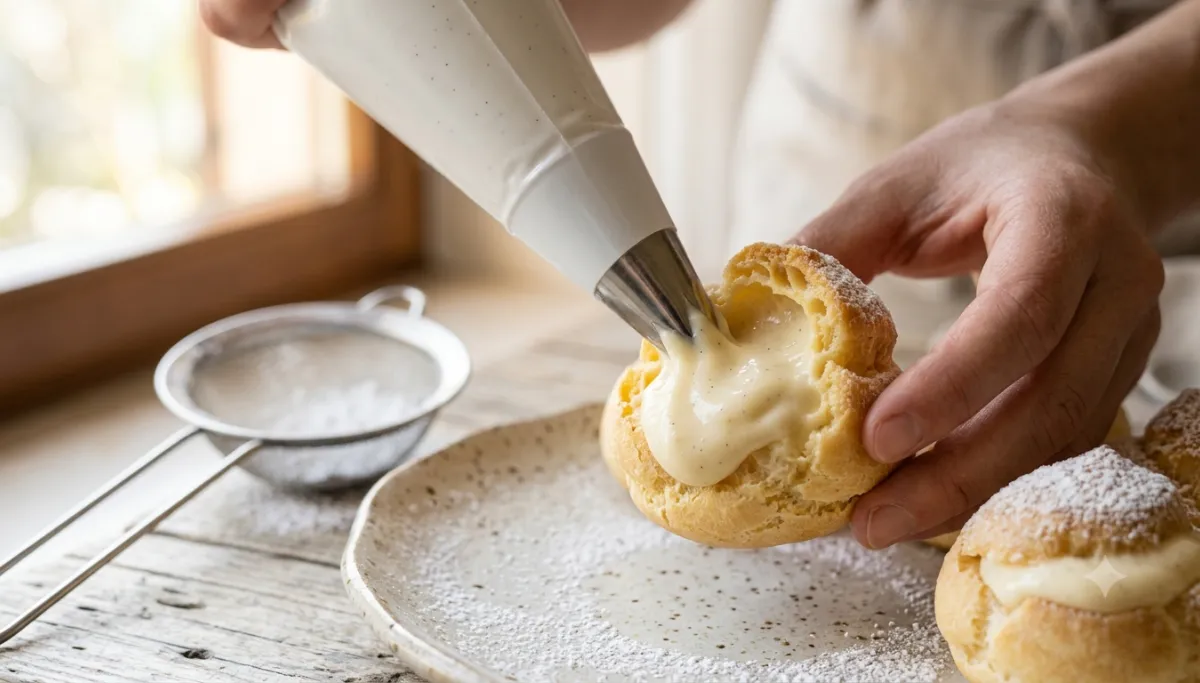
I transfer the chilled whipped cream into a piping bag fitted with a suitable nozzle.
Then I gently pipe the cream into each pastry.
I stop when the pastry feels filled but not overly stretched. Adding too much cream at once can cause the delicate sponge to crack.
Step 11: Finish With Powdered Sugar
For the final presentation, I lightly dust the pastries with powdered sugar.
I think this simple finish works beautifully because it keeps attention on the delicate shape rather than covering the pastry with heavy decoration.
My Tips for a Light and Airy Result
The first thing I pay attention to is the eggs. They need to be whipped properly with the sugar because this creates much of the volume in the batter. The second important point is folding. I never vigorously stir the flour into the eggs. Gentle folding helps retain the air bubbles that give the pastry its characteristic light texture.
I also make sure the oven is fully preheated before the tray goes inside. A properly heated oven helps the batter begin setting at the right time. Finally, I never fill the pastries while they are still warm. Warm sponge and whipped cream do not make a good combination. The cream can soften too quickly and lose its structure.
Common Mistakes I Avoid
Overmixing the Batter
Overmixing after adding the flour can remove too much air from the whipped eggs. The result may be flatter and denser pastries.
Using Warm Cream
The cream should be cold before whipping. Cold heavy cream generally holds its structure much better.
Opening the Oven Too Early
Because the pastries are delicate, I avoid opening the oven door unnecessarily during baking.
Filling Before Cooling
I always wait until the pastries have completely cooled before adding the cream. This keeps the filling stable and prevents it from becoming runny.
Easy Ways to Serve Them
I prefer serving Tette delle Monache slightly chilled or at a cool room temperature. The delicate pastry pairs beautifully with coffee or espresso, making it a lovely afternoon dessert. It can also be served after an Italian-inspired dinner.
For a special occasion, I like arranging several pastries on a clean serving plate and adding a light dusting of powdered sugar immediately before serving. I avoid adding too many toppings because the pastry itself has a distinctive appearance.
Storage and Make-Ahead Tips
I recommend storing filled Tette delle Monache in an airtight container in the refrigerator. Because the filling contains whipped cream, I prefer consuming the pastries within one to two days for the best texture.
If I want to prepare them ahead of time, I usually bake the pastry shells first and allow them to cool completely. I can then store the shells separately and prepare the cream closer to serving time. This approach helps the exterior remain lighter instead of becoming too soft from prolonged contact with the filling.
Nutrition Information
The following nutrition information is an approximate estimate for one pastry and will vary according to the exact ingredients and amount of cream used.
| Nutrient | Approx. Per Serving |
|---|---|
| Calories | 180–240 kcal |
| Carbohydrates | 22–30 g |
| Protein | 4–6 g |
| Fat | 8–13 g |
| Sugar | 14–20 g |
| Fiber | 0–1 g |
| Sodium | 40–80 mg |
| Calcium | Moderate amount |
These values are estimates rather than laboratory-tested figures. The final nutritional content will depend on the specific ingredients and portion size.
Frequently Asked Questions
What are Tette delle Monache?
Tette delle Monache are delicate Italian pastries made from a light sponge-like batter and filled with cream. They are particularly associated with Puglia and are known for their rounded shape.
What does Tette delle Monache mean?
The Italian name literally translates to “nun’s breasts,” referring to the rounded shape of the traditional pastry.
Where did Tette delle Monache originate?
The pastry is strongly associated with Puglia in southern Italy, particularly the area around Altamura.
What makes these pastries so light?
The whipped eggs are an important part of the texture. Beating the eggs and sugar until thick and airy, followed by gentle folding of the dry ingredients, helps create a light sponge.
Can I make the pastry without potato starch?
Yes, but the texture may be slightly different. Potato starch helps create a lighter and more delicate crumb. If necessary, you can replace it with additional flour, although the result may be somewhat denser.
Can I use pastry cream instead of whipped cream?
Yes. Whipped cream gives the pastry a particularly light filling, while pastry cream creates a richer and more substantial dessert.
Why did my pastries become flat?
The most common reason is losing too much air from the whipped eggs. Overmixing the batter or allowing it to sit too long before baking can affect its volume.
How long can I store Tette delle Monache?
Filled pastries are best stored in the refrigerator and enjoyed within one to two days for the best texture.
Can I freeze these pastries?
I prefer not to freeze the filled version because whipped cream can change texture after freezing and thawing. The unfilled pastry shells are generally more suitable for advance preparation.
What should I serve with these Italian pastries?
I like serving them with espresso, cappuccino, or regular coffee. Their light texture also makes them a pleasant dessert after a hearty meal.
Conclusion: Tette delle Monache is one of those Italian desserts that proves a recipe does not need dozens of ingredients to feel special. The delicate sponge, soft cream filling, and simple powdered-sugar finish create a dessert that looks elegant while still being achievable in a home kitchen.
What I enjoy most about making this recipe is the technique. Whipping the eggs properly and gently folding in the dry ingredients may seem like small details, but they make a noticeable difference in the final texture. If you enjoy exploring traditional Italian desserts and want to try something less common than the usual tiramisu or cannoli, I think this pastry is a beautiful recipe to add to your baking list.
Tette delle Monache Recipe:
Learn how to make Tette delle Monache, a light Italian cream-filled pastry with a soft sponge-like texture and sweet whipped cream filling.
Type: Dessert
Cuisine: Italian
Keywords: tette delle monache recipe, Italian dessert, cream filled pastry, Italian pastry recipe
Recipe Yield: 10 servings
Calories: 220 kcal
Preparation Time: PT25M
Cooking Time: PT20M
Total Time: PT45M
Recipe Ingredients:
- 4 large eggs
- 100 g granulated sugar
- 100 g all-purpose flour
- 30 g potato starch
- 1 cup heavy cream
- 1 pinch salt
- 1 teaspoon lemon zest
- 1 teaspoon vanilla extract
- Powdered sugar for dusting
- 1/2 teaspoon vanilla extract
- 2 tablespoons powdered sugar
Recipe Instructions: Preheat the oven to 350°F (175°C) and line a baking tray with parchment paper. In a large mixing bowl, beat the eggs and granulated sugar with an electric mixer for 8–10 minutes, until the mixture becomes pale, thick, and fluffy. Sift together the all-purpose flour, potato starch, and salt, then gently fold the dry ingredients into the egg mixture with a spatula. Add the vanilla extract and lemon zest, if using, and fold carefully without overmixing. Transfer the batter to a piping bag and pipe 10 small rounded mounds onto the prepared baking tray. Bake for 15–20 minutes, or until lightly golden and firm on the outside. Remove from the oven and let the pastries cool completely on a wire rack. Meanwhile, beat the heavy cream, powdered sugar, and vanilla extract until soft, stable peaks form. Make a small opening in each cooled pastry and gently pipe the whipped cream inside. Arrange the filled pastries on a serving plate and dust lightly with powdered sugar. Serve fresh or chilled for the best texture and flavor.
1 thought on “Tette delle Monache Recipe: A Light Italian Cream-Filled Pastry”