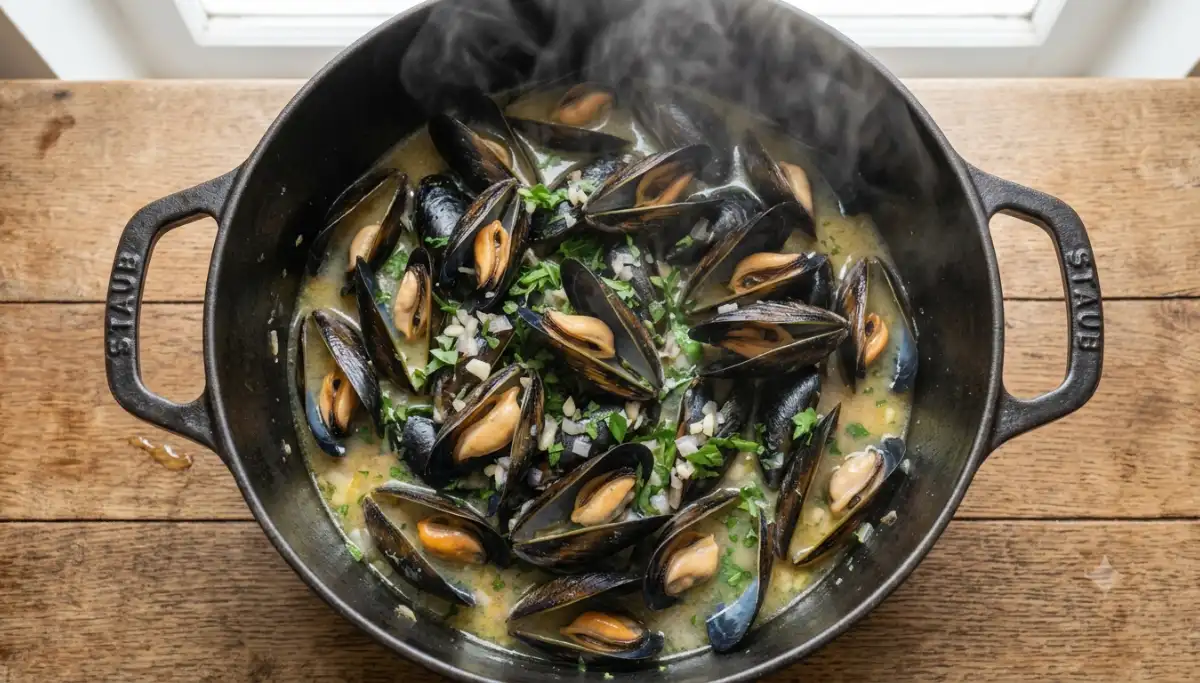
Moules Mariniere Recipe: Moules Mariniere is one of those recipes that proves a delicious meal does not always require a long ingredient list. This classic French dish combines fresh mussels with white wine, garlic, shallots, butter, and fresh herbs to create a light but deeply flavorful sauce.
When I first tried making this style of mussels at home, I was surprised by how quickly everything came together. The mussels cook in just a few minutes, and their natural juices blend with the wine, butter, garlic, and herbs to create a sauce that is perfect for dipping with crusty bread.
Hi, my name is Om Shinde. I am a chef, and I enjoy preparing recipes that are simple enough for a home kitchen but still feel special when served at the table. I like experimenting with traditional recipes while keeping the method practical and easy to follow. My family and relatives often enjoy the dishes I prepare, and I love sharing these cooking ideas with others.
For this version, I have kept the classic character of Moules Mariniere while making the instructions easy to follow. I also included a few practical tips that I use when preparing mussels at home.
Recipe Overview
| Detail | Information |
|---|---|
| Prep Time | 15 minutes |
| Cook Time | 10 minutes |
| Total Time | 25 minutes |
| Cuisine | French |
| Course | Main Course |
| Servings | 4 |
| Estimated Cost | $15–$25 |
| Difficulty | Easy |
| Best Served | Hot |
The recipe is best served immediately after cooking because mussels have the best texture when they are fresh and hot. I usually prepare some crusty bread alongside them so I can soak up every bit of the aromatic sauce.
What Makes Moules Mariniere Special
The beauty of Moules Mariniere comes from its simplicity. There is no heavy cream or complicated sauce required in the traditional preparation. Instead, the broth develops from white wine, aromatics, butter, herbs, and the natural juices released by the mussels.
I particularly enjoy the contrast between the tender mussels and the light, savory broth. The garlic and shallots add depth, while parsley brings a fresh finish.
The white wine is also important because it gives the broth acidity and brightness. If you enjoy seafood dishes with clean and fresh flavors, this is a recipe worth trying.
A Few Fresh Ingredients Do the Work
| Ingredient | Quantity | Notes |
|---|---|---|
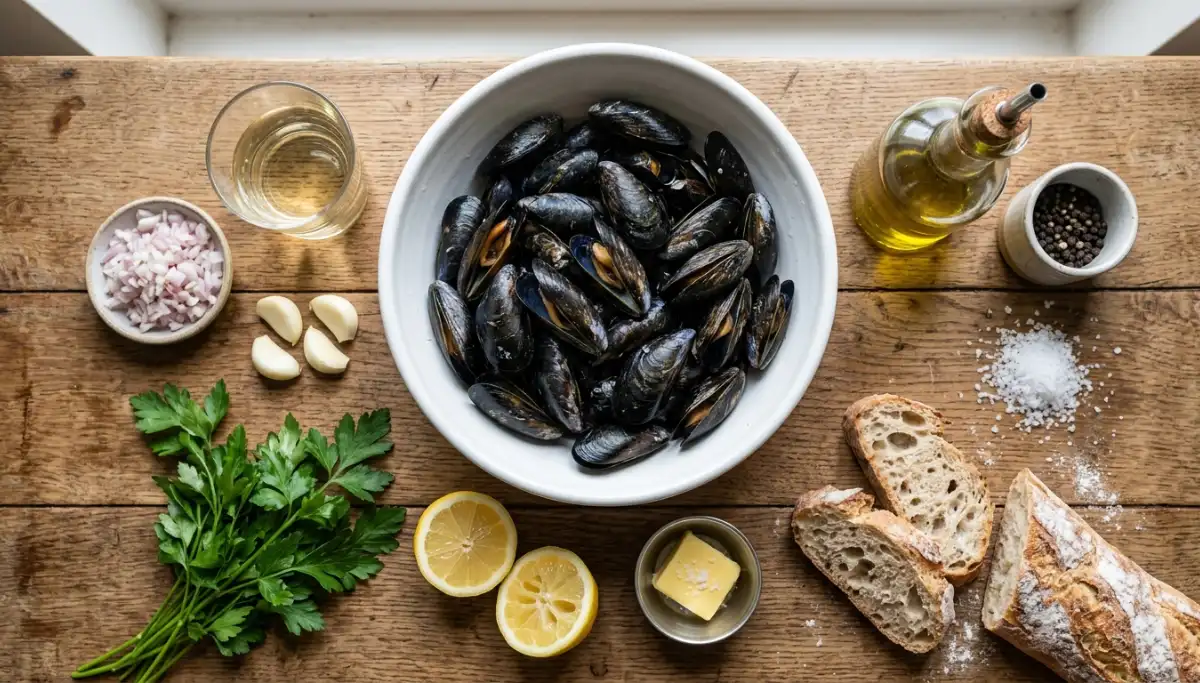
| Fresh mussels | 2 lb | Cleaned and debearded |
| Dry white wine | 1 cup | Such as Sauvignon Blanc |
| Shallots | 2 medium | Finely chopped |
| Garlic | 3 cloves | Minced |
| Unsalted butter | 3 tbsp | Divided |
| Fresh parsley | 1/4 cup | Chopped |
| Olive oil | 1 tbsp | For sautéing |
| Lemon juice | 1 tbsp | Freshly squeezed |
| Black pepper | 1/2 tsp | Freshly ground |
| Salt | As needed | Use sparingly |
| Crusty bread | As needed | For serving |
Fresh mussels are the most important ingredient, so I recommend buying them from a reliable seafood source. They should smell fresh and clean rather than strongly fishy.
I also prefer using a dry white wine rather than a sweet wine. The wine should complement the mussels rather than make the broth overly sweet.
The Equipment I Keep Ready
| Equipment | Purpose |
|---|---|
| Large heavy pot | Cooking the mussels |
| Large bowl | Cleaning and soaking mussels |
| Colander | Draining mussels |
| Chef’s knife | Chopping aromatics |
| Cutting board | Preparing ingredients |
| Measuring cups | Measuring wine |
| Measuring spoons | Measuring smaller ingredients |
| Wooden spoon | Stirring |
| Large serving bowls | Serving |
| Kitchen tongs | Handling mussels |
A large pot is particularly useful because the mussels need enough room to open properly during cooking. I avoid overcrowding them into a small saucepan.
My Simple Method From Start to Finish
Step 1: Clean the Mussels
I start by placing the mussels in a bowl of cold water.
I inspect each one and remove any visible dirt or debris. I also pull away the fibrous beard attached to the shell using a firm downward motion.
Any mussel with a cracked or badly damaged shell should be discarded.
Step 2: Check the Shells
Before cooking, I check the mussels carefully.
Fresh mussels should generally have closed shells. If a shell is slightly open, I gently tap it against the counter. If it closes, it may still be suitable for cooking. If it remains open or appears damaged, I discard it.
This is an important step because seafood freshness matters greatly in this recipe.
Step 3: Prepare the Aromatics
I finely chop the shallots and mince the garlic.
I also chop the fresh parsley and keep it ready for later.
Preparing everything before I start cooking makes the recipe much easier because the actual cooking process moves quickly.
Step 4: Soften the Shallots
I place a large pot over medium heat and add olive oil along with about one tablespoon of butter.
Once the butter melts, I add the chopped shallots.
I cook them for around 2 to 3 minutes until they become soft and translucent. I avoid browning them heavily because I want the sauce to remain light and delicate.
Step 5: Add the Garlic
Next, I add the minced garlic.
I cook it for around 30 seconds to 1 minute, stirring continuously.
The garlic should become fragrant without turning dark. Burnt garlic can make the broth bitter, so I keep a close eye on it.
Step 6: Pour in the White Wine
I carefully pour the dry white wine into the pot.
The mixture will begin bubbling almost immediately. I let it simmer for about 2 minutes so the alcohol can cook off slightly and the wine can blend with the shallots and garlic.
At this point, the kitchen starts to smell incredibly aromatic.
Step 7: Add the Mussels
I add the cleaned mussels to the pot and gently toss them with the wine mixture.
Then I cover the pot tightly with a lid.
I increase the heat slightly and allow the mussels to steam for approximately 4 to 6 minutes.
Step 8: Let the Shells Open
While the mussels cook, I occasionally shake the pot gently.
The steam helps the shells open, while the mussels release their natural juices into the broth.
I avoid opening the lid repeatedly because doing so allows the steam to escape and can slow down the cooking process.
Step 9: Check the Mussels
After about 4 to 6 minutes, I check the pot.
Most of the mussels should have opened. Any mussels that remain tightly closed after cooking should be discarded.
I never force a closed mussel open just to serve it.
Step 10: Finish the Sauce
I remove the pot from the heat and add the remaining butter.
I gently stir until the butter melts into the hot broth.
Then I add fresh lemon juice, chopped parsley, and freshly ground black pepper.
I taste the broth before adding salt because the mussels themselves can naturally contribute saltiness.
Step 11: Serve Immediately
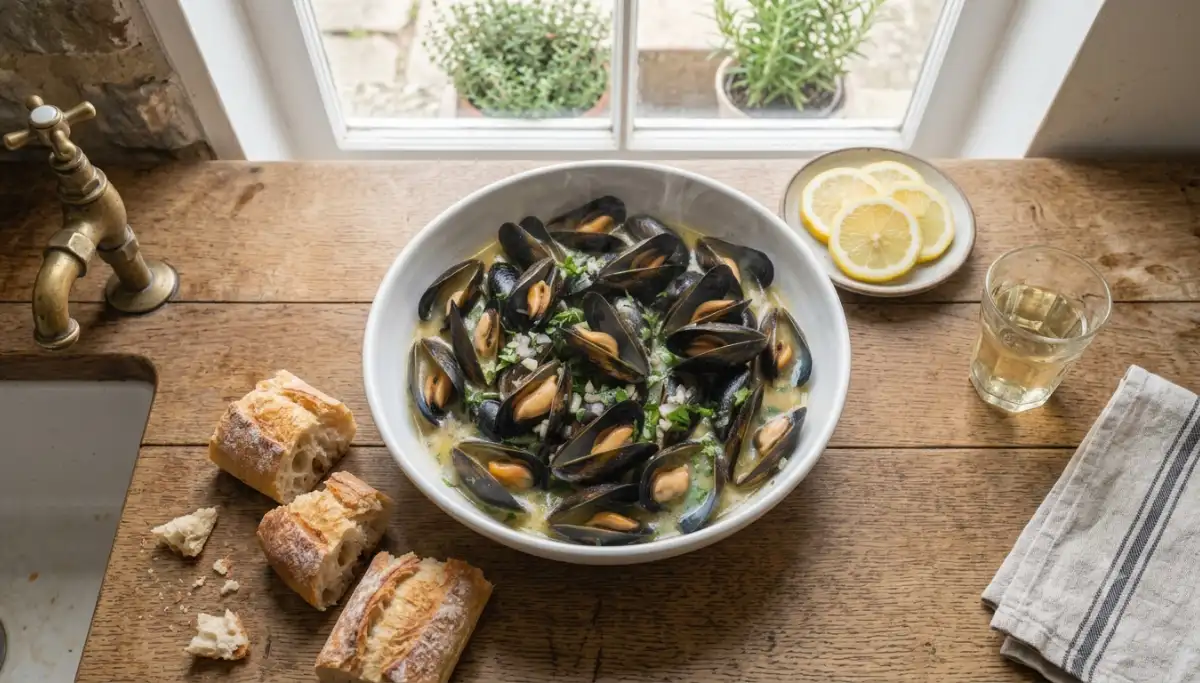
I divide the mussels between large bowls and spoon the aromatic broth over them.
I finish each serving with a little extra parsley and serve immediately with crusty bread.
The bread is more than just a side dish for me. It is perfect for soaking up the flavorful wine and butter broth at the bottom of the bowl.
Read Also: Bajan Macaroni Pie Recipe: A Creamy Caribbean Classic
How I Get the Best Flavor
The quality of the mussels makes the biggest difference in this recipe. I always try to use mussels that are fresh and properly cleaned. I also avoid overcooking them. Mussels need only a few minutes to open, and cooking them for too long can make the meat tough and chewy.
Another important detail is controlling the garlic. I want the garlic to add aroma without becoming the dominant flavor. Finally, I always finish the dish with fresh parsley and a little lemon juice. That small amount of acidity brightens the buttery broth and keeps the dish from feeling heavy.
Easy Ways to Change the Recipe
Add More Garlic
If you are a garlic lover, you can increase the garlic slightly. I recommend adding it gradually so it does not overpower the delicate seafood.
Make the Broth Richer
For a richer version, you can add an additional tablespoon of butter at the end. I prefer adding butter after cooking because it creates a smooth finish without making the sauce unnecessarily heavy.
Add a Little Heat
A small pinch of red pepper flakes can give the broth a gentle kick. I usually keep the amount low because the traditional dish is more focused on the mussels, wine, herbs, and aromatics.
Serve With More Bread
A crusty baguette is one of my favorite sides for this recipe. The bread absorbs the broth beautifully and turns the light seafood dish into a more satisfying meal.
What I Serve Alongside It
Moules Mariniere works beautifully as a main course, particularly when served with crusty French-style bread. I also like pairing it with a simple green salad dressed with lemon and olive oil. The fresh salad provides a nice contrast to the warm buttery broth.
For a larger dinner, you can serve roasted vegetables or thin-cut fries alongside the mussels. I recommend keeping the side dishes relatively simple because the mussel broth is the star of the meal.
Storage and Reheating
I recommend eating Moules Mariniere immediately after cooking whenever possible.
If you have leftovers, remove the mussels from their shells and store them with some of the broth in an airtight container in the refrigerator. Use the leftovers as soon as possible rather than keeping them for several days.
When reheating, warm them gently in a saucepan over low to medium heat. Avoid boiling the mussels because high heat can make the meat tough. I do not recommend freezing the finished dish because the texture of the mussels can deteriorate after freezing and reheating.
Nutrition Information
The following nutrition information is an approximate estimate and can vary according to the ingredients and serving size.
| Nutrient | Approx. Per Serving |
|---|---|
| Calories | 320–420 kcal |
| Protein | 25–30 g |
| Carbohydrates | 10–15 g |
| Fat | 15–22 g |
| Fiber | 1–2 g |
| Sodium | 600–900 mg |
| Iron | Moderate to high |
| Vitamin B12 | High |
Mussels are naturally rich in protein and provide several important nutrients. The exact nutritional values will depend on the amount of butter, wine, bread, and other ingredients used.
Frequently Asked Questions
What is Moules Mariniere?
Moules Mariniere is a classic French-style mussel dish in which fresh mussels are steamed with ingredients such as white wine, shallots, garlic, butter, and fresh herbs.
What does Mariniere mean?
The term refers to a traditional preparation of mussels with a simple aromatic broth, commonly featuring white wine and other fresh ingredients.
What type of wine should I use?
I recommend a dry white wine such as Sauvignon Blanc or another crisp dry variety. Avoid very sweet wines because they can change the balance of the broth.
How long do mussels take to cook?
Mussels generally cook quickly. In this recipe, I steam them for around 4 to 6 minutes, or until the shells open.
What should I do with mussels that remain closed?
Any mussels that remain tightly closed after cooking should be discarded. Do not force them open for serving.
Can I make this recipe without wine?
Yes. You can replace the wine with seafood stock or another suitable broth. The flavor will be different, but the dish can still be delicious.
Can I use frozen mussels?
Fresh mussels are my first choice for this recipe. If using frozen mussels, follow the package instructions because preparation and cooking times can vary.
What bread goes best with Moules Mariniere?
I like serving it with crusty baguette or another rustic bread. The bread is excellent for soaking up the garlic, butter, and wine broth.
Can I add cream to the sauce?
You can, although traditional Moules Mariniere is generally prepared with a lighter wine-based broth. Cream will make the dish richer and heavier.
Why are my mussels chewy?
Overcooking is one of the most common reasons mussels become tough. They only need a few minutes of steaming, so I remove them from the heat as soon as they have opened.
Conclusion: Moules Mariniere is a beautiful example of how a handful of fresh ingredients can create an impressive meal without complicated cooking techniques. I love the combination of tender mussels, dry white wine, garlic, shallots, butter, lemon, and fresh parsley. The broth is light enough to keep the seafood at the center while still being flavorful enough to make every bite interesting.
The most important things I keep in mind are using fresh mussels, cleaning them properly, avoiding overcooking, and serving the dish immediately. Once those basics are handled, the recipe becomes surprisingly easy. If you want a French-inspired seafood dinner that feels special but can still be prepared quickly at home, this is one recipe I would happily make again.
Moules Mariniere Recipe
A classic French-inspired mussel dish made with fresh mussels, dry white wine, garlic, shallots, butter, lemon, and fresh parsley.
Type: Main Course
Cuisine: French
Keywords: moules mariniere recipe, moules mariniere, French mussel recipe, mussels in white wine, French seafood recipe, garlic mussels, easy mussel recipe
Recipe Yield: 4 servings
Calories: 370
Preparation Time: PT15M
Cooking Time: PT10M
Total Time: PT25M
Recipe Ingredients:
- 2 lb fresh mussels, cleaned and debearded
- 1 cup dry white wine
- 2 medium shallots, finely chopped
- 3 garlic cloves, minced
- 1/4 cup fresh parsley, chopped
- 1 tablespoon fresh lemon juice
- 1 tablespoon olive oil
- 3 tablespoons unsalted butter
- 1/2 teaspoon freshly ground black pepper
- Salt, as needed
- Crusty bread, for serving
Recipe Instructions: Clean the mussels under cold water and remove the beards. Discard cracked or damaged shells. Check the mussels and discard any that remain open after gently tapping them. Finely chop the shallots, mince the garlic, and chop the fresh parsley. Heat olive oil and 1 tablespoon butter in a large pot over medium heat. Add the shallots and cook for 2–3 minutes until softened. Add minced garlic and cook for about 30 seconds to 1 minute. Pour in the dry white wine and simmer for about 2 minutes. Add the cleaned mussels and gently toss them with the wine mixture. Cover the pot and steam for 4–6 minutes, gently shaking the pot occasionally. Discard any mussels that remain tightly closed. Remove the pot from the heat and stir in the remaining butter. Add lemon juice, fresh parsley, and black pepper. Taste and adjust seasoning carefully. Divide the mussels and broth between serving bowls and serve immediately with crusty bread.