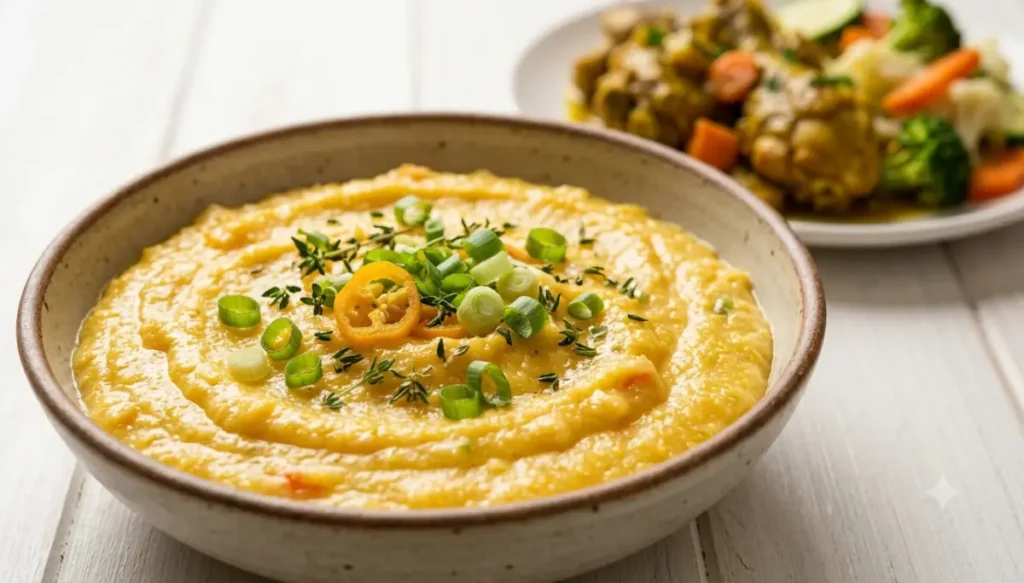
Jamaican Turn Cornmeal Recipe: Jamaican Turn Cornmeal is one of those dishes that looks humble in the pot but develops an incredibly deep flavor as it cooks. Fine yellow cornmeal is combined with coconut milk, herbs, aromatics, and gentle heat until it becomes thick, smooth, and wonderfully savory. In Jamaica, it is also commonly called Tun Cornmeal or Turned Cornmeal.
What I love about this recipe is that it does not depend on complicated cooking techniques. The real magic happens while the cornmeal slowly absorbs the seasoned coconut mixture. Once you learn how to control the heat and keep the mixture moving, you can make a beautifully creamy and flavorful dish right in your own kitchen.
Hi, my name is Om Shinde. I am a chef, and I enjoy experimenting with traditional recipes and turning simple ingredients into comforting homemade dishes. When I first tried Jamaican Turn Cornmeal, I was impressed by how much flavor could come from ingredients that are so easy to find. I especially enjoy serving it with something saucy because the cornmeal absorbs all those extra flavors beautifully.
Recipe Overview
| Detail | Information |
|---|---|
| Prep Time | 15 minutes |
| Cook Time | 30 minutes |
| Total Time | 45 minutes |
| Cuisine | Jamaican / Caribbean |
| Course | Side Dish |
| Servings | 4 |
| Estimated Cost | $5–$8 |
| Difficulty | Easy to Moderate |
| Best Served | Warm |
This version is designed as a savory Jamaican-style turn cornmeal made with coconut milk, vegetables, herbs, and Scotch bonnet pepper. Turn cornmeal can also be prepared with additions such as okra, pigeon peas, or saltfish, depending on the style and what you want to serve with it.
The Story Behind This Comforting Cornmeal Dish
Jamaican Turn Cornmeal is a traditional Caribbean preparation in which cornmeal is cooked with seasoned liquid until it becomes thick and cohesive. Unlike sweet cornmeal porridge, this version is savory and is commonly treated as a side dish.
The Jamaican preparation is often made with coconut milk, scallion, thyme, onion, garlic, peppers, and other seasonings. It can be served alongside fish, curry dishes, saltfish, beans, or vegetables.
I think the most interesting part is the texture. It should not simply taste like boiled cornmeal. When prepared correctly, it becomes rich and cohesive while still remaining soft enough to scoop and enjoy with a flavorful main dish.
Why This Recipe Works So Well
The secret is really in the liquid and the cooking process. Coconut milk gives the cornmeal a naturally rich base, while onion, garlic, scallion, thyme, and pepper build layers of savory flavor before the cornmeal even goes into the pot.
Another important trick is mixing the cornmeal with water before adding it to the hot coconut mixture. This helps prevent large lumps from forming. Several Jamaican-style recipes recommend this approach, along with adding the cornmeal gradually while stirring.
I also keep the heat low after adding the cornmeal. Rushing this part can make the mixture tighten too quickly, making it harder to achieve the smooth texture I want.
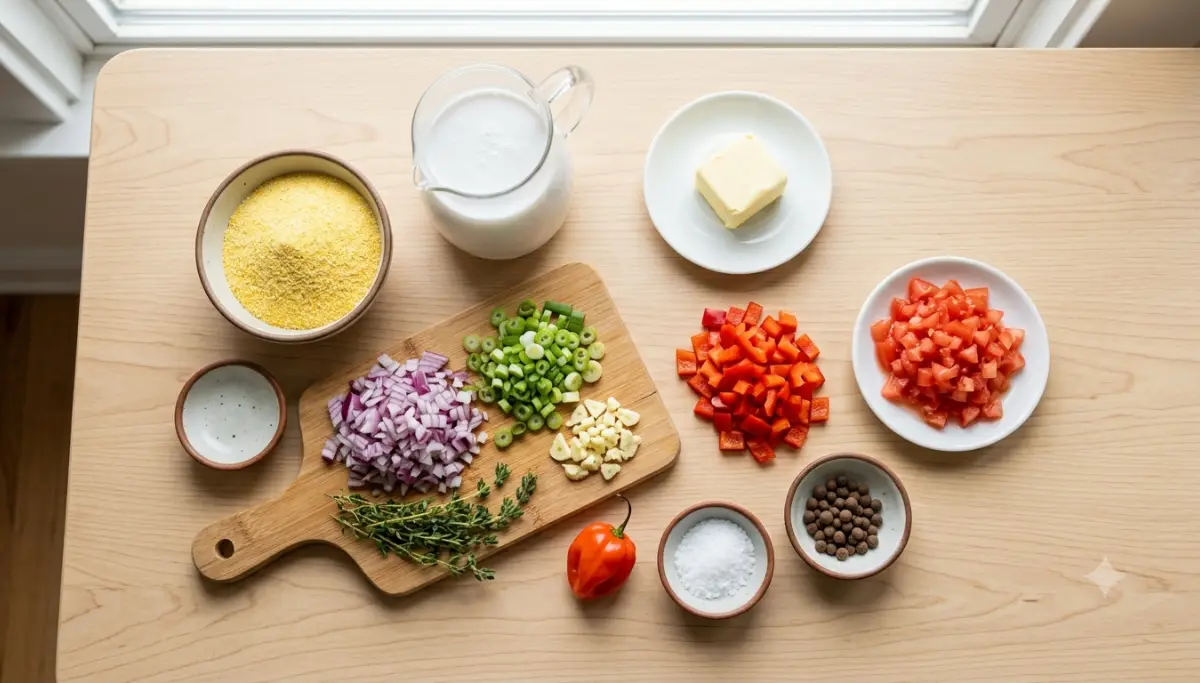
Everything You Need Before You Start
| Ingredient | Quantity | Notes |
|---|---|---|
| Fine yellow cornmeal | 1½ cups | Use refined/fine cornmeal |
| Water | 1½ cups | For mixing with cornmeal |
| Coconut milk | 2 cups | Full-fat gives richer flavor |
| Coconut oil | 2 tbsp | Vegetable oil also works |
| Butter | 2 tbsp | Use vegan butter if desired |
| Onion | 1 small | Finely chopped |
| Scallions | 2 stalks | Finely chopped |
| Green bell pepper | ½ | Finely chopped |
| Tomato | 1 medium | Chopped |
| Garlic | 2 cloves | Minced |
| Fresh thyme | 1 sprig | Dried thyme can substitute |
| Allspice | ¼ tsp | Adds Caribbean warmth |
| Salt | 1 tsp | Adjust to taste |
| Scotch bonnet pepper | 1 | Whole for mild heat, chopped for more heat |
The ingredient combination follows the familiar Jamaican approach of building flavor with coconut milk, aromatics, thyme, allspice, and Scotch bonnet pepper. Different Jamaican versions vary considerably, so ingredients such as okra, pigeon peas, mixed vegetables, or saltfish can also be incorporated.
A Few Things I Prepare First
Before turning on the stove, I like to chop all the vegetables and measure the cornmeal. This recipe becomes much easier when everything is ready because the cornmeal mixture needs attention once it enters the pot.
I also mix the cornmeal with the measured water in a bowl before cooking. I whisk it until there are no obvious dry pockets. This creates a loose cornmeal mixture that can be poured into the hot seasoned liquid gradually.
Building the Flavor Before the Cornmeal
Step 1: Sauté the Aromatics
I begin by heating the coconut oil in a sturdy saucepan over medium heat. Then I add the chopped onion, scallion, bell pepper, and tomato.
I let the vegetables cook for about 2–3 minutes, stirring occasionally. I am not trying to brown them heavily; I simply want them to soften and release their aroma.
Step 2: Bring in the Garlic and Herbs
Next, I add the minced garlic and thyme. I stir everything together for about 30 seconds to a minute.
At this point, the kitchen starts smelling completely different. The combination of garlic, thyme, scallion, and coconut oil gives the dish a warm Caribbean-style aroma.
Step 3: Create the Coconut Base
I pour in the coconut milk and add the butter, allspice, salt, and Scotch bonnet pepper.
I bring the mixture to a gentle boil while stirring occasionally. If I want the heat from the Scotch bonnet to be subtle, I leave the pepper whole. If I want a noticeably spicy dish, I chop a small amount before adding it.
The Cornmeal Goes In
Step 4: Lower the Heat
Once the coconut mixture is hot, I reduce the heat to low.
This is an important moment. I do not want the liquid aggressively boiling when I add the cornmeal mixture because the cornmeal can thicken very quickly and become difficult to stir.
Step 5: Add the Cornmeal Slowly
I slowly pour the prepared cornmeal-and-water mixture into the pot while stirring continuously.
I keep stirring as I pour rather than adding everything at once. This is one of the best ways I know to keep the finished dish smooth and prevent stubborn lumps.
At first, the mixture may look much thinner than you expect. That is completely normal. The cornmeal will continue absorbing the liquid as it cooks.
Step 6: Let the Mixture Turn Thick
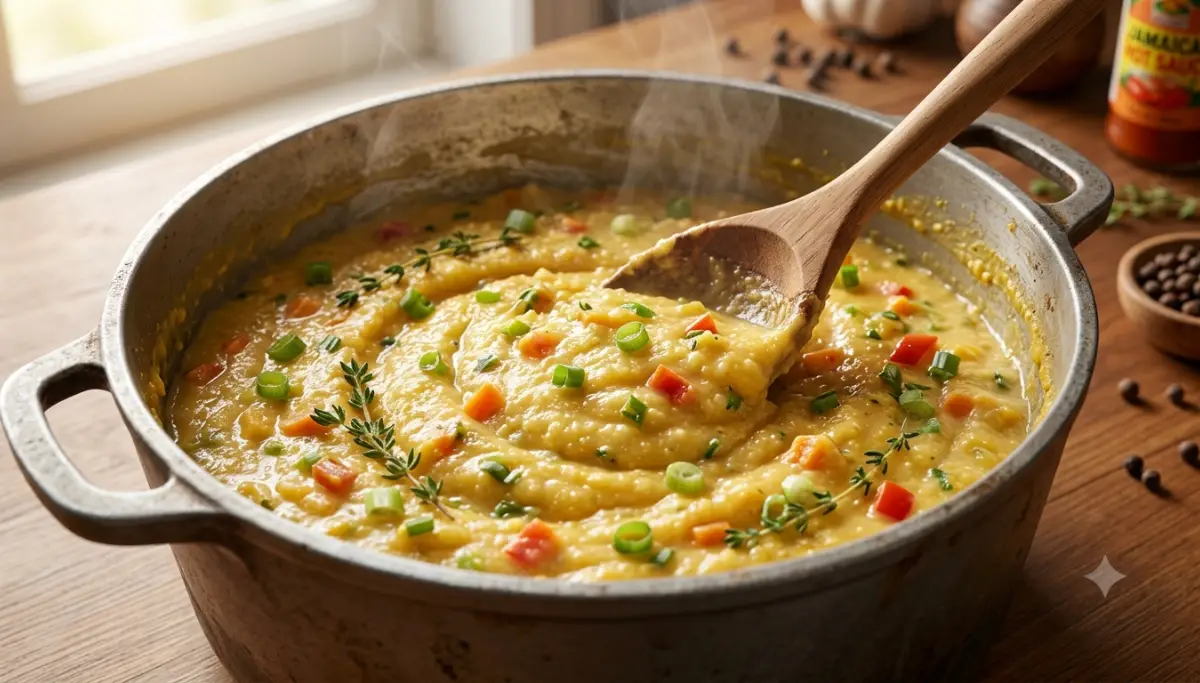
Once all the cornmeal has been incorporated, I continue stirring until the mixture becomes noticeably thick.
I then cover the pot and allow it to cook gently. A Jamaican-style preparation may cook for around 20–30 minutes depending on the cornmeal and liquid ratio. During this time, I check it periodically and stir from the bottom so nothing sticks.
Step 7: Keep an Eye on the Texture
After about 10 minutes, I carefully open the pot and give everything a good stir.
If the cornmeal looks excessively thick, I add a small splash of warm water or coconut milk. If it is still very loose, I allow it to continue cooking uncovered for a few minutes.
The finished texture should be thick and cohesive rather than watery.
Step 8: Give It a Final Stir
Near the end of cooking, I stir the cornmeal thoroughly and scrape around the bottom and sides of the pot.
When it starts pulling away from the sides while remaining soft and moist, I know it is close to finished. I remove the thyme stem and Scotch bonnet pepper before serving.
Video For Guide
If you want to see how traditional Jamaican turn cornmeal comes together, this video is worth watching before you start. It shows the cooking and stirring technique that gives the dish its thick, smooth texture.
How I Know the Texture Is Right
Texture is probably the most important part of this recipe.
If the cornmeal is too loose, it needs more cooking time so that the grains can absorb additional liquid. If it becomes extremely stiff, I loosen it with a little warm water or coconut milk.
I aim for a texture that holds its shape on a spoon but still feels soft when eaten. It should be thick enough to serve beside a curry or stew without immediately spreading across the plate.
My Favorite Ways to Serve It
Jamaican Turn Cornmeal is incredibly versatile. It can be served with steamed or fried fish, curry chicken, butter beans, saltfish, or vegetables.
Personally, I like pairing it with something that has plenty of sauce. The cornmeal acts almost like a sponge, picking up the flavors from the curry or stew.
You can also serve it with sautéed vegetables for a simpler meal. If you enjoy seafood, steamed or fried fish makes a particularly natural pairing.
Simple Variations Worth Trying
Add Okra
Okra can be sliced and cooked into the seasoned liquid before the cornmeal is added. It brings another vegetable element and is used in several Caribbean-style versions of turn cornmeal.
Make It With Pigeon Peas
Pigeon peas can turn the dish into something heartier. Jamaican recipes also use pigeon peas with coconut milk, herbs, and cornmeal.
Add Saltfish
For a more substantial version, cooked and prepared saltfish can be incorporated into the seasoned mixture. This creates a noticeably different dish with a stronger savory flavor.
Adjust the Heat
Scotch bonnet is a classic Jamaican ingredient, but you do not have to make the dish extremely spicy. Keeping the pepper whole allows its flavor to infuse the dish while limiting the direct heat.
Mistakes I Try to Avoid
The first mistake is adding dry cornmeal directly into aggressively boiling liquid. That can make lumps develop very quickly. Mixing the cornmeal with water beforehand gives you much more control.
Another mistake is using high heat throughout the entire cooking process. Once the cornmeal has been added, I prefer low heat and regular stirring.
Finally, I avoid walking away from the pot for too long. Thick cornmeal can settle on the bottom and stick if it is left unattended.
Storage and Reheating
I prefer eating turn cornmeal fresh because the texture is at its best when it is warm and freshly cooked.
If you have leftovers, allow them to cool before transferring them to an airtight container. Refrigerate them and use them within a few days.
When reheating, add a small splash of water or coconut milk and warm the cornmeal gently. Stirring occasionally helps restore some of its softer texture.
Nutrition Information
The following values are approximate and will depend on the exact ingredients, coconut milk brand, butter, and serving size used.
| Nutrient | Approx. Per Serving |
|---|---|
| Calories | 280–350 kcal |
| Protein | 4–6 g |
| Carbohydrates | 38–45 g |
| Fat | 12–16 g |
| Fiber | 3–5 g |
| Sugar | 3–6 g |
| Sodium | 350–600 mg |
| Potassium | 250–400 mg |
These numbers are estimates rather than laboratory-tested values. Using light coconut milk or changing the amount of butter and oil will alter the final nutrition profile.
Frequently Asked Questions
What is Jamaican Turn Cornmeal?
Jamaican Turn Cornmeal, also called Tun Cornmeal, is a savory Jamaican dish made by cooking cornmeal with coconut milk, herbs, seasonings, and often vegetables or other additions. It is generally served as a side dish.
Is Jamaican Turn Cornmeal the same as cornmeal porridge?
No. Although both use cornmeal, Jamaican Turn Cornmeal is generally savory and thick, while Jamaican cornmeal porridge is a sweet breakfast-style preparation commonly made with ingredients such as sugar, vanilla, and nutmeg.
Why do I mix cornmeal with water first?
Mixing the cornmeal with water creates a loose paste or slurry that can be incorporated gradually into the hot coconut mixture. This helps reduce the chance of large lumps forming.
Can I make this recipe without coconut milk?
Yes, but coconut milk provides much of the richness and characteristic flavor. You can substitute part or all of it with broth or water, although the final dish will taste lighter.
Can I make Turn Cornmeal spicy?
Absolutely. Scotch bonnet pepper is traditionally used in Jamaican-style versions. You can leave it whole for a gentler flavor or chop it for more heat.
What can I serve with Turn Cornmeal?
It works well with steamed or fried fish, curry chicken, saltfish, butter beans, vegetables, and other saucy Caribbean dishes.
Why did my cornmeal become too thick?
Cornmeal continues absorbing liquid as it cooks. If the mixture becomes too thick, stir in a small amount of warm water or coconut milk until you reach the texture you want.
How do I prevent lumps in Turn Cornmeal?
Mix the cornmeal with water before adding it to the pot, lower the heat, pour it in gradually, and keep stirring while incorporating it. These steps are especially useful for achieving a smoother result.
Can I add vegetables to this recipe?
Yes. Okra, bell peppers, tomatoes, and other vegetables can be incorporated. Some versions also use pigeon peas or saltfish.
Is Turn Cornmeal gluten-free?
Cornmeal itself is naturally gluten-free, but if you are cooking for someone with celiac disease or strict gluten avoidance, check the packaging of packaged ingredients such as seasonings and broth for possible cross-contact or added gluten.
A Dish That Rewards Patience
Jamaican Turn Cornmeal is not a recipe where I try to rush the cooking process. The ingredients are simple, but the final texture depends on giving the cornmeal enough time to absorb the seasoned coconut mixture properly.
What makes this dish special to me is the combination of creamy coconut milk, earthy cornmeal, fresh thyme, scallion, garlic, and that unmistakable Caribbean warmth from Scotch bonnet pepper. It is comforting enough to enjoy on its own, yet versatile enough to sit beside fish, curry, beans, or vegetables.
Jamaican Turn Cornmeal Recipe
A traditional Jamaican turn cornmeal recipe made with coconut milk, herbs, vegetables, and Caribbean seasonings. This creamy and flavorful side dish is easy to prepare and perfect with fish, curry, or vegetables.
Type: Side Dish
Cuisine: Jamaican
Keywords: jamaican turn cornmeal recipe, turn cornmeal, tun cornmeal, jamaican cornmeal recipe, caribbean side dish, coconut cornmeal recipe, traditional jamaican recipes
Recipe Yield: 4 servings
Calories: 320
Preparation Time: PT15M
Cooking Time: PT30M
Total Time: PT45M
Recipe Ingredients:
- 1½ cups fine yellow cornmeal
- 1½ cups water
- 2 cups coconut milk
- 2 tbsp coconut oil
- 2 tbsp butter
- 1 small onion, finely chopped
- 2 scallions, chopped
- ½ green bell pepper, chopped
- 1 medium tomato, chopped
- 2 garlic cloves, minced
- 1 sprig fresh thyme
- ¼ tsp allspice
- 1 tsp salt
- 1 Scotch bonnet pepper
Recipe Instructions: Heat coconut oil in a saucepan and sauté onion, scallions, bell pepper, tomato, garlic, and thyme. Add coconut milk, butter, allspice, salt, and Scotch bonnet pepper and bring to a gentle boil. Mix cornmeal with water separately. Lower the heat and slowly pour the cornmeal mixture into the pot while stirring continuously. Cook on low heat for 20–30 minutes, stirring occasionally until thick and smooth. Remove thyme and pepper before serving warm.