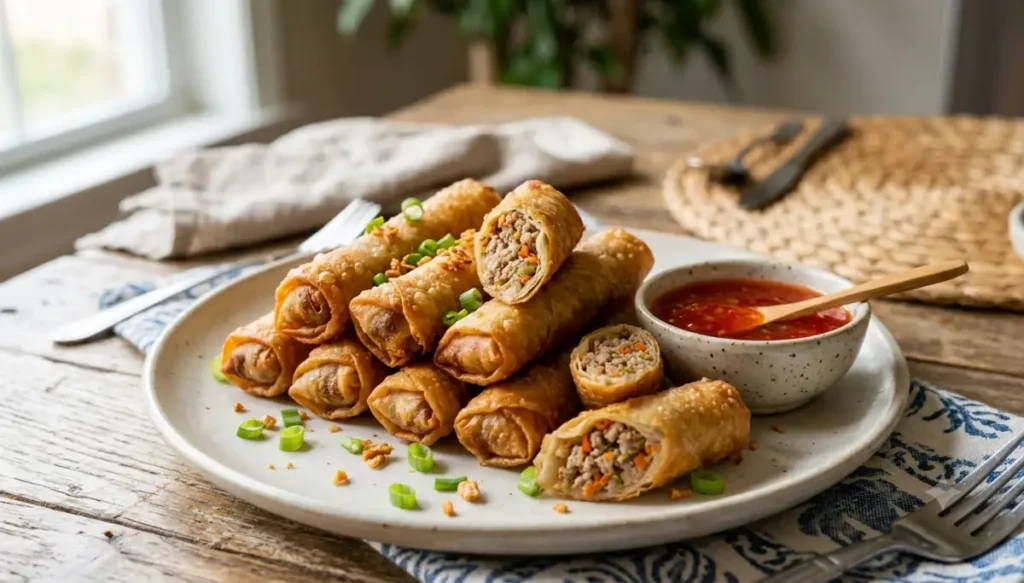
Lumpiang Shanghai Recipe: Lumpiang Shanghai is a popular Filipino appetizer known for its crispy wrapper and flavorful meat filling. These golden spring rolls are usually filled with ground pork, finely chopped vegetables, garlic, and seasonings before being rolled into small, bite-sized pieces and fried until crisp. I love this recipe because it combines simple ingredients with a satisfying crunch that makes every bite enjoyable.
One of the best things about making Lumpiang Shanghai at home is that I can prepare a large batch for family gatherings, parties, holidays, or everyday snacks. They are easy to serve, convenient to eat, and delicious when paired with a sweet chili dipping sauce or a simple vinegar dip.
Hi, my name is Om Shinde. I am a chef who enjoys experimenting with different recipes and preparing delicious food for family and friends. I love discovering dishes from different cultures and learning how simple ingredients can create memorable flavors. With this Lumpiang Shanghai recipe, I want to share an approachable method that helps you prepare crispy, flavorful Filipino spring rolls in your own kitchen.
Whether you are trying Filipino food for the first time or already enjoy these crunchy rolls, this recipe will guide you through the ingredients, preparation, rolling technique, and frying process.
What Makes Lumpiang Shanghai Special?
Lumpiang Shanghai is a Filipino-style spring roll typically made with a seasoned ground meat filling wrapped in a thin pastry wrapper. The rolls are generally smaller than many other varieties of spring rolls, making them ideal finger food for parties and celebrations.
Traditional versions commonly use ground pork, although chicken, beef, and vegetarian fillings are also possible. Finely chopped carrots, onions, and garlic add flavor and texture, while seasonings help bring the ingredients together.
What makes these rolls especially appealing is the contrast between the crunchy exterior and juicy filling. When cooked correctly, the wrapper becomes golden and crisp without overwhelming the savory mixture inside.
Lumpiang Shanghai is commonly served with dipping sauces. Sweet chili sauce is a popular choice, while some people prefer vinegar-based dips for a tangier flavor.
Why I Love Making These Filipino Spring Rolls
I enjoy this recipe because it uses everyday ingredients and does not require complicated cooking techniques.
The filling can be mixed in advance, which makes preparation easier when I am cooking for several people. Once the rolls are assembled, I can fry them in batches and serve them hot.
Another advantage is that the recipe can be adjusted according to personal preferences. I can use ground chicken instead of pork, add more vegetables, or change the seasoning to create a different flavor.
These spring rolls are also suitable for celebrations because they can be prepared ahead of time and frozen before frying. This makes them especially useful when I want to prepare party food without doing everything at the last minute.
Everything You Need for the Filling
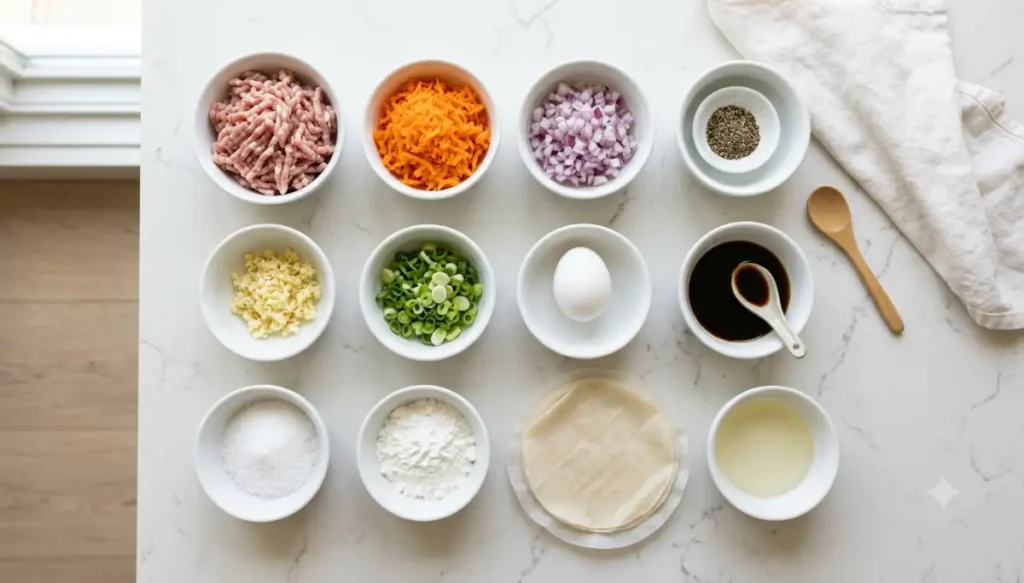
The ingredients below create a flavorful filling that works well with thin spring roll wrappers. I recommend chopping the vegetables finely so they mix evenly with the ground meat and are easier to roll.
Ingredients Table
| Ingredient | Quantity | Purpose |
|---|---|---|
| Ground pork | 1 lb | Main filling |
| Lumpia or spring roll wrappers | 25–30 sheets | Crispy outer layer |
| Carrot | 1 medium | Adds sweetness and texture |
| Yellow onion | 1 small | Adds savory flavor |
| Garlic | 3 cloves | Adds aroma |
| Egg | 1 large | Helps bind the filling |
| Soy sauce | 1 tablespoon | Adds savory depth |
| Salt | 1/2 teaspoon | Enhances flavor |
| Ground black pepper | 1/2 teaspoon | Adds mild warmth |
| Green onions | 2 tablespoons, chopped | Optional freshness |
| Cornstarch | 1 tablespoon | Helps bind excess moisture |
| Water | 2 tablespoons | Sealing the wrappers |
| Neutral cooking oil | As needed | Deep-frying |
The amount of oil needed depends on the size of your pan. Use enough oil to allow the rolls to cook evenly without overcrowding the pan.
For the best results, choose thin lumpia wrappers rather than thick pastry sheets. Thin wrappers usually produce a lighter, crispier exterior.
Kitchen Tools for Easy Preparation
Equipment Table
| Equipment | Purpose |
|---|---|
| Large mixing bowl | Combining the filling |
| Cutting board | Preparing vegetables |
| Sharp knife | Chopping ingredients |
| Grater | Grating the carrot |
| Measuring spoons | Measuring seasonings |
| Small bowl | Holding water for sealing |
| Large plate or tray | Arranging rolled spring rolls |
| Deep skillet or frying pan | Frying the rolls |
| Tongs | Turning and removing rolls |
| Paper towels or wire rack | Draining excess oil |
| Food thermometer | Checking the filling temperature |
Having the ingredients and equipment ready before rolling makes the process smoother and helps prevent the wrappers from drying out.
How to Make Lumpiang Shanghai From Scratch
Making Lumpiang Shanghai involves three main tasks: preparing the filling, rolling the wrappers, and frying the finished rolls. Taking a little care with each stage helps create a crisp exterior and a properly cooked filling.
Step 1: Prepare the Vegetables
Peel and finely grate the carrot. Chop the onion, garlic, and green onions into small pieces.
I recommend keeping the vegetable pieces small because large chunks can make the filling difficult to spread evenly. If the grated carrot is particularly wet, gently squeeze out excess moisture before adding it to the mixture.
Step 2: Mix the Meat Filling
Place the ground pork in a large mixing bowl. Add the carrot, onion, garlic, green onions, egg, soy sauce, salt, black pepper, and cornstarch.
Mix everything until the ingredients are evenly distributed. Avoid excessive mixing, which can make the filling denser than necessary.
For food safety, keep the raw filling refrigerated if you are not assembling the rolls immediately.
Step 3: Prepare the Wrappers
Carefully separate the lumpia wrappers and place them on a clean work surface.
Keep unused wrappers covered with a slightly damp, clean kitchen towel to prevent them from drying out. Dried wrappers can crack when rolled and become difficult to seal.
If your wrappers are frozen, thaw them according to the package instructions before separating them.
Step 4: Add the Filling
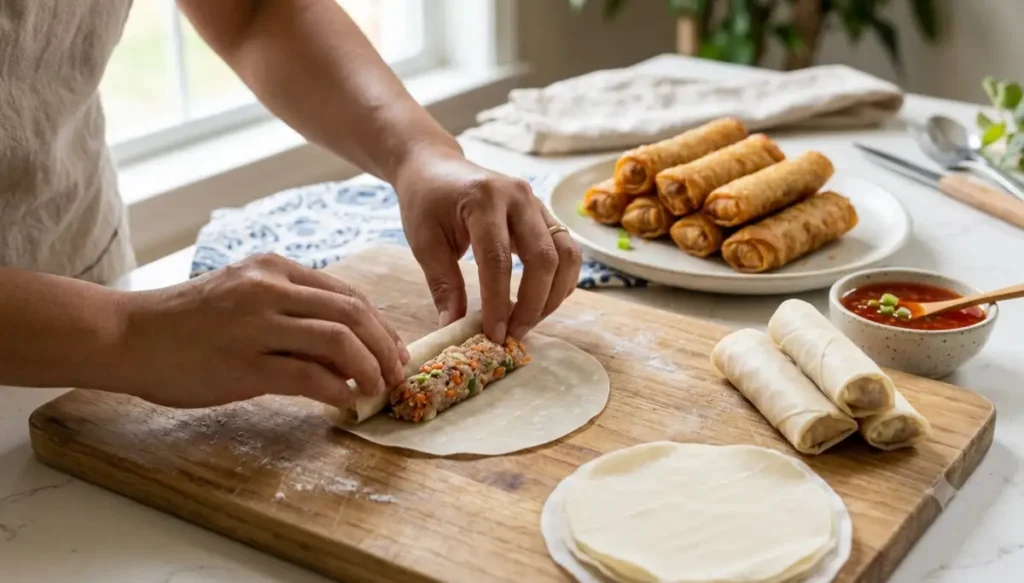
Place one wrapper on your work surface with a corner pointing toward you.
Spoon a small amount of filling near the bottom corner, leaving enough space along the sides to fold the wrapper securely.
Spread the filling into a narrow line rather than forming a thick mound. A thin, even layer helps the spring roll cook more consistently.
Step 5: Roll and Seal Each Piece
Fold the bottom corner over the filling, then fold the left and right sides inward.
Roll the wrapper tightly toward the opposite corner. Dab a little water along the final edge and press gently to seal.
Repeat the process with the remaining filling and wrappers. Arrange the finished rolls on a tray in a single layer so they do not stick together.
Step 6: Heat the Cooking Oil
Pour neutral cooking oil into a deep skillet or frying pan. Heat it to approximately 350°F (175°C).
If the oil is too cool, the wrappers can absorb excess oil and become greasy. If it is too hot, the outside may brown before the meat filling cooks through.
A food thermometer is helpful for maintaining a consistent temperature.
Step 7: Fry Until Golden and Crispy
Carefully place a few rolls into the hot oil. Do not overcrowd the pan because adding too many at once can lower the oil temperature.
Fry the rolls for approximately 4–6 minutes, turning them as needed, until the wrappers are golden brown and crisp. Cooking time depends on the thickness of the rolls and the temperature of the oil.
Because these rolls contain raw ground pork, verify that the center reaches at least 160°F (71°C). If necessary, continue cooking until the safe internal temperature is reached.
Step 8: Drain and Serve
Remove the cooked rolls with tongs and place them on a wire rack or paper towels to drain excess oil.
Allow them to cool slightly before serving. The filling will be very hot immediately after frying.
Serve the Lumpiang Shanghai while the wrappers are still crispy, with your favorite dipping sauce on the side.
Read Also: Sauerkraut Recipe: Easy Homemade Fermented Cabbage
My Best Tips for Extra-Crispy Results
The quality of the wrapper plays an important role in the finished texture. Thin lumpia wrappers generally provide a crispier result than thicker spring roll wrappers.
I also recommend avoiding excess moisture in the filling. Wet vegetables can make the mixture loose and may cause the wrappers to become soggy.
Another useful tip is to roll the wrappers firmly without tearing them. Loose rolls can allow oil to enter the filling, while damaged wrappers may open during frying.
Maintain a steady oil temperature and fry in small batches. If the pan becomes overcrowded, the rolls may cook unevenly.
Finally, drain the cooked rolls on a wire rack whenever possible. A rack allows air to circulate around the wrappers and helps prevent the bottoms from becoming soft.
Easy Filling Variations to Try
Ground Chicken Lumpiang Shanghai
Ground chicken is a useful alternative if you prefer a different meat filling. Choose ground chicken with enough moisture to keep the filling from becoming dry, and cook it to an internal temperature of 165°F (74°C).
Beef Lumpiang Shanghai
Ground beef creates a richer flavor. Use lean ground beef if you want to reduce excess fat in the filling, and ensure it reaches a safe internal temperature of 160°F (71°C).
Vegetable Lumpia
For a vegetarian version, replace the meat with finely chopped cabbage, carrots, mushrooms, and other vegetables. Use an appropriate binder if needed and check the wrapper ingredients to ensure they meet your dietary requirements.
Adjust the Seasoning
You can add a small amount of additional black pepper or finely chopped green onions to personalize the filling. I recommend making small adjustments rather than adding too many seasonings at once.
What to Serve With Lumpiang Shanghai
Sweet chili sauce is a classic accompaniment because its sweet, tangy, and mildly spicy flavor complements the savory filling.
You can also serve the rolls with a simple vinegar dip containing vinegar, chopped garlic, and a little black pepper. For a milder option, try a sweet dipping sauce.
Lumpiang Shanghai works well as an appetizer before a main meal. It can also be served alongside steamed rice, noodles, fresh vegetables, or other Filipino dishes.
For parties, arrange the rolls on a large platter and place the dipping sauces in small bowls nearby. This makes them easy for guests to pick up and enjoy.
How to Store and Reheat Leftovers
Allow cooked spring rolls to cool slightly, then refrigerate them in a covered container within two hours of cooking. For best quality, use refrigerated leftovers within 3–4 days.
To reheat, arrange the rolls in a single layer in an oven or air fryer until they are heated thoroughly and the wrappers become crisp again. Avoid stacking them because trapped steam can soften the exterior.
You can also freeze uncooked, assembled rolls. Place them in a single layer until firm, then transfer them to a freezer-safe container with parchment paper between layers.
For best quality, use frozen uncooked rolls within approximately 2–3 months. They can generally be fried from frozen, but they may need additional cooking time. Avoid thawing them at room temperature, and always check that the filling reaches the recommended safe internal temperature.
A Simple Nutrition Breakdown
The following values are estimates for one serving of approximately five small spring rolls, assuming the recipe makes about 25 rolls. Actual nutrition will vary according to the meat, wrappers, portion size, and amount of oil absorbed during frying.
Nutrition Table
| Nutrient | Approximate Amount Per Serving |
|---|---|
| Calories | 300–400 kcal |
| Protein | 15–22 g |
| Carbohydrates | 25–35 g |
| Fat | 14–23 g |
| Saturated Fat | 4–7 g |
| Fiber | 1–3 g |
| Sugar | 1–4 g |
| Sodium | 400–700 mg |
These figures are general estimates rather than laboratory-tested nutritional values. For more precise information, calculate the nutrition using the exact ingredients and quantities you use.
Frequently Asked Questions
What is Lumpiang Shanghai made of?
Lumpiang Shanghai is typically made with ground pork, finely chopped vegetables, garlic, seasonings, and thin lumpia wrappers. The rolls are shaped into small cylinders and fried until golden and crispy.
Can I make Lumpiang Shanghai without pork?
Yes. You can use ground chicken, ground beef, or a vegetable-based filling instead. Adjust the cooking time as needed and ensure meat fillings reach the appropriate safe internal temperature.
Why do my spring rolls become soggy?
Soggy spring rolls can result from excess moisture in the filling, oil that is too cool, or overcrowding the pan. Draining them on a wire rack also helps maintain crispness after frying.
Can I prepare Lumpiang Shanghai ahead of time?
Yes. You can assemble the rolls ahead of time and refrigerate them briefly before cooking, or freeze them for longer storage. Keep raw meat fillings refrigerated and do not leave uncooked rolls at room temperature for extended periods.
Can I cook Lumpiang Shanghai in an air fryer?
Yes. Lightly brush or spray the rolls with cooking oil and arrange them in a single layer in the air fryer. Cook at approximately 375°F (190°C), turning as needed, until crisp and the filling reaches a safe internal temperature. Exact cooking time depends on the size of the rolls and the appliance.
What dipping sauce goes best with Lumpiang Shanghai?
Sweet chili sauce is a popular choice. Garlic vinegar dip is another good option if you prefer something tangier and less sweet.
Can I freeze uncooked Lumpiang Shanghai?
Yes. Freeze the assembled rolls in a single layer first, then transfer them to a freezer-safe container. Separate layers with parchment paper to prevent sticking.
How do I keep the wrappers from tearing?
Thaw frozen wrappers properly, separate them gently, and keep unused sheets covered so they do not dry out. Avoid placing too much filling inside each wrapper.
How do I know when Lumpiang Shanghai is fully cooked?
The wrapper should be golden brown and crisp, but color alone does not guarantee that the meat is cooked. Use a food thermometer to verify that ground pork or beef reaches 160°F (71°C), or ground chicken reaches 165°F (74°C).
Is Lumpiang Shanghai served as a main dish or appetizer?
It is most commonly served as an appetizer, party snack, or finger food. You can also serve it with rice and vegetables as part of a larger meal.
A Crispy Filipino Favorite Worth Making at Home
Lumpiang Shanghai is a delicious Filipino recipe that turns simple ingredients into crispy, flavorful spring rolls. The seasoned meat filling, thin wrapper, and golden exterior make these rolls a satisfying choice for parties, family meals, and special occasions.
I especially like how easy it is to customize the filling and prepare the rolls ahead of time. With carefully prepared ingredients, properly sealed wrappers, and consistently hot oil, you can make a batch that is crisp on the outside and flavorful inside.
Serve your homemade Lumpiang Shanghai with sweet chili sauce or a tangy vinegar dip, and enjoy this popular Filipino favorite fresh from the pan.
Lumpiang Shanghai Recipe: Crispy Filipino Spring Rolls
Make crispy Filipino Lumpiang Shanghai at home with seasoned ground pork, fresh vegetables, and crunchy spring roll wrappers. Serve with sweet chili dipping sauce.
Type: Lunch
Cuisine: Filipino
Keywords: Lumpiang Shanghai Recipe, Filipino Spring Rolls, Crispy Lumpia, Pork Lumpia Recipe
Recipe Yield: 30 spring rolls
Preparation Time: 25 minutes
Cooking Time: 20 minutes
Total Time: 45 minutes
Recipe Ingredients:
- Carrot, finely grated
- Ground pork
- Onion, finely chopped
- Garlic, minced
- Egg
- Soy sauce
- Green onions, chopped
- Cornstarch
- Salt
- Black pepper
- Lumpia or spring roll wrappers
- Cooking oil, for frying
Recipe Instructions:


[…] Read Also: Lumpiang Shanghai Recipe: Crispy Filipino Spring Rolls […]