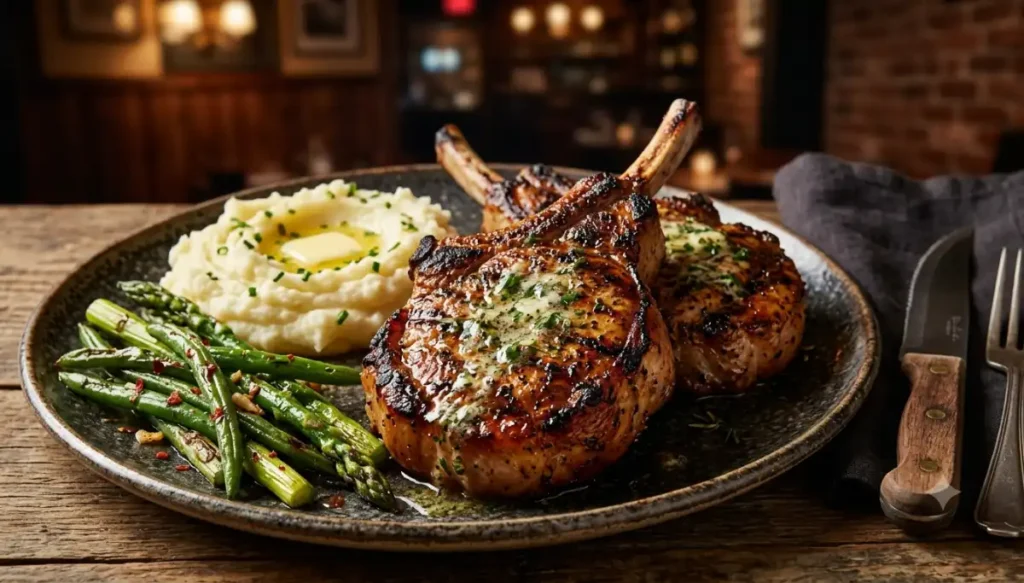
LongHorn Steakhouse Cowboy Pork Chop Recipe: If you enjoy thick, juicy pork chops with a deeply browned crust, the LongHorn Steakhouse Cowboy Pork Chop Recipe is one of those meals that can turn an ordinary dinner into something that feels straight out of a steakhouse. LongHorn Steakhouse has described its Cowboy Pork Chops as two 8-ounce, center-cut, bone-in pork chops that are seared to a golden brown.
What makes this style of pork chop interesting to me is the cut itself. Instead of using thin pork chops that can quickly become dry, I use thick bone-in chops and focus on getting a strong sear while keeping the inside juicy. The combination of bold seasoning, high-heat browning, and a buttery garlic finish gives every bite a rich, savory character.
Hi, my name is Om Shinde. I am a chef, and I enjoy turning restaurant-style dishes into practical recipes that can be made in a home kitchen. When I make pork chops, my biggest goal is always the same: I want a beautiful crust on the outside without sacrificing tenderness inside. This recipe is built around that idea.
Why This Cowboy Pork Chop Stands Out
The first thing I notice about a good cowboy pork chop is its thickness. A thick center-cut, bone-in chop gives me much more room to build flavor without immediately drying out the meat. LongHorn’s menu description specifically identifies its Cowboy Pork Chops as two 8-ounce center-cut bone-in chops.
The second important part is the sear. I want the skillet hot enough to develop a deep golden-brown crust, but I do not want to keep the pork over high heat for the entire cooking process. After the initial sear, I finish the chops more gently and check their internal temperature.
Finally, I like finishing the pork with garlic butter and fresh parsley. It melts over the hot surface and gives the chop a glossy, savory finish that makes the whole dish feel much more complete.
Recipe Overview
| Detail | Information |
|---|---|
| Prep Time | 10 minutes |
| Resting Time | 5 minutes |
| Cook Time | 25 minutes |
| Total Time | 40 minutes |
| Cuisine | American |
| Course | Main Course |
| Servings | 4 |
| Difficulty | Moderate |
| Estimated Cost | $18–$24 |
| Best Served | Hot |
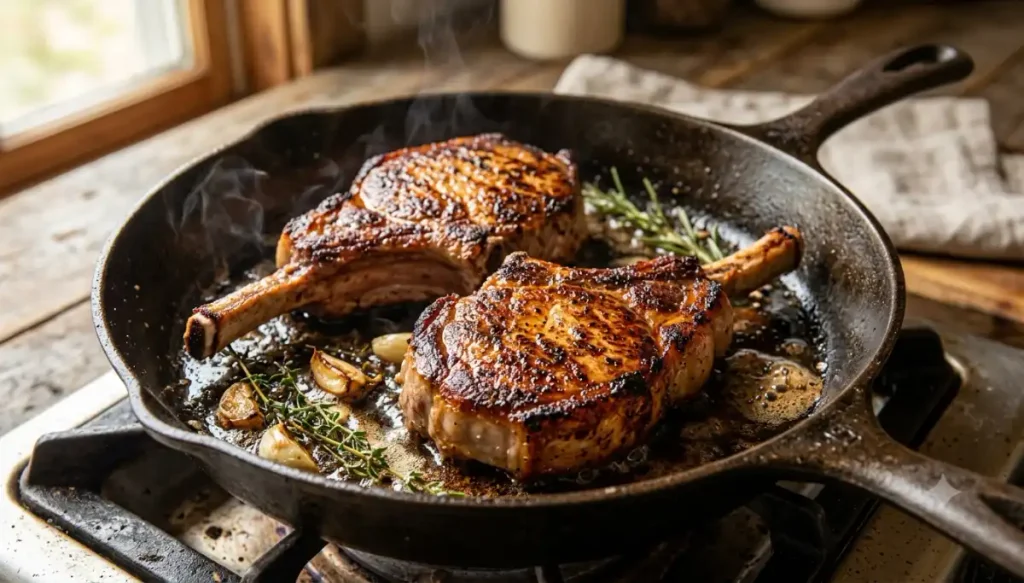
The estimated cost is for a homemade version and can vary depending on the price of pork in your area. The recipe makes four servings using four thick bone-in pork chops.
The Right Cut Makes the Biggest Difference
Choosing Thick Bone-In Chops
For this recipe, I strongly prefer pork chops that are about 1 to 2 inches thick. A bone-in cut gives the dish that classic cowboy-pork-chop appearance and provides enough thickness for a good sear followed by gentle cooking.
Thin pork chops can still be used, but the cooking time will need to be reduced considerably. They can move from perfectly cooked to dry much faster, so I would not use the same timing for a thin cut.
Before seasoning, I pat the chops thoroughly dry with paper towels. Removing excess surface moisture helps the meat brown instead of simply steaming in the skillet.
The Bold Seasoning Blend
Ingredients Table
| Ingredient | Quantity | Purpose |
|---|---|---|
| Bone-in pork chops | 4, 1–2 inches thick | Main protein |
| Olive oil | 1 tablespoon | Helps with searing |
| Paprika | 1 teaspoon | Color and mild warmth |
| Salt | 1/2 teaspoon | Seasoning |
| Black pepper | 1/2 teaspoon | Peppery flavor |
| Garlic powder | 1 teaspoon | Savory depth |
| Onion powder | 1 teaspoon | Balanced seasoning |
| Creole seasoning | 1/2 tablespoon | Optional extra flavor |
| Italian seasoning | 1 teaspoon | Herb flavor |
| Unsalted butter | 3 tablespoons | Finishing |
| Fresh garlic | 1 tablespoon, minced | Garlic-butter flavor |
| Fresh parsley | 2 tablespoons, chopped | Fresh finish |
This seasoning combination is my homemade interpretation for a LongHorn-style pork chop rather than a claim that it reproduces a proprietary restaurant formula. LongHorn’s public menu identifies the restaurant dish as center-cut bone-in chops, but its proprietary seasoning recipe is not provided on the menu.
The Creole seasoning is optional. I like using it when I want the crust to have a little more personality, but you can leave it out for a simpler steakhouse-style flavor.
Simple Equipment for a Proper Sear
Equipment Table
| Equipment | Purpose |
|---|---|
| Cast-iron skillet | High-heat searing |
| Mixing bowl | Preparing seasoning |
| Small bowl | Making garlic butter |
| Tongs | Flipping pork safely |
| Cutting board | Preparation |
| Sharp knife | Chopping garlic and parsley |
| Meat thermometer | Checking doneness |
| Paper towels | Drying pork chops |
A cast-iron skillet is my preferred choice because it holds heat extremely well. If you do not have one, a heavy stainless-steel skillet can also work.
The meat thermometer is especially useful for thick pork chops. Instead of guessing based only on cooking time, I can check the internal temperature directly.
My Method for a Deep Golden Crust
Step 1: Prepare the Seasoning
I begin by combining paprika, salt, black pepper, garlic powder, onion powder, Creole seasoning, and Italian seasoning in a small bowl.
I mix everything thoroughly so that the seasoning is evenly distributed. This prevents one part of the pork from becoming heavily seasoned while another part tastes bland.
Step 2: Dry and Season the Pork
I pat each pork chop dry with paper towels. Then I lightly rub both sides with olive oil.
Next, I generously coat the chops with the seasoning mixture. I make sure to season the edges as well because the edges are often forgotten even though they can develop excellent flavor during searing.
I let the seasoned chops sit for about 5–10 minutes before cooking.
Step 3: Prepare the Garlic Butter
While the pork rests, I combine softened or room-temperature butter with minced garlic and chopped parsley.
I mix everything together and keep it ready near the stove.
This small preparation makes the finishing stage much easier because I do not have to stop cooking to chop ingredients while the pork is already in the skillet.
Step 4: Heat the Skillet Properly
I place my cast-iron skillet over medium-high heat and allow it to become properly hot.
Then I add the olive oil.
I want the pan hot enough that the pork begins searing immediately when it touches the surface. If the pan is not hot enough, the chops can release moisture and develop a pale surface instead of a deep golden crust.
Step 5: Sear the First Side
I carefully place the seasoned pork chops into the skillet.
I leave them undisturbed for around 4–5 minutes. I resist the temptation to move them around because constant movement prevents the crust from developing properly.
When the first side becomes deeply golden brown, I turn the chops over.
Step 6: Brown the Second Side
I cook the second side for another 4–5 minutes.
At this stage, the kitchen should start smelling strongly of garlic, herbs, and browned seasoning.
If the chops are particularly thick, I also use tongs to briefly sear the edges. This gives the fat and outer surface additional color while helping create an even crust.
Step 7: Finish the Pork Gently
Once both sides have developed a strong sear, I reduce the heat and continue cooking until the pork reaches a safe internal temperature.
For pork chops, the USDA recommends cooking to 145°F (63°C) followed by a three-minute rest. I use a food thermometer inserted into the thickest part of the meat, avoiding the bone when checking.
If your skillet and pork chops are oven-safe, you can also transfer the skillet to a preheated 400°F oven to finish thicker chops. The exact finishing time will depend on thickness, starting temperature, and the amount of searing already done.
Step 8: Add the Garlic Butter
When the pork is nearly finished, I add the prepared garlic butter.
I spoon the melted butter over the pork chops several times. This gives the surface an extra layer of savory flavor and creates a glossy finish.
I avoid burning the garlic by keeping the heat controlled during this stage.
Step 9: Let the Pork Rest
I transfer the cooked chops to a clean plate and let them rest for at least 3–5 minutes.
This is a small step, but I never skip it. Resting gives the meat time to settle after cooking and helps keep the pork juicy when I cut into it.
Read Also: Jamaican Turn Cornmeal Recipe
How I Keep Thick Pork Chops Juicy
Do Not Judge Doneness by Color Alone
One of the easiest ways to overcook pork is to keep cutting into it to check whether it is ready.
I prefer using a thermometer. The USDA recommends a minimum internal temperature of 145°F (63°C), followed by a three-minute rest.
This is especially useful with thick chops because the outside can look beautifully browned while the center is still cooking.
Give the Meat a Proper Rest
Resting is not just a restaurant trick. It is an easy home-cooking habit that makes a noticeable difference.
After removing the pork from the heat, I leave it untouched for several minutes before serving. I use that time to finish the side dishes or prepare the plates.
What to Serve With Cowboy Pork Chops
Classic Steakhouse Sides
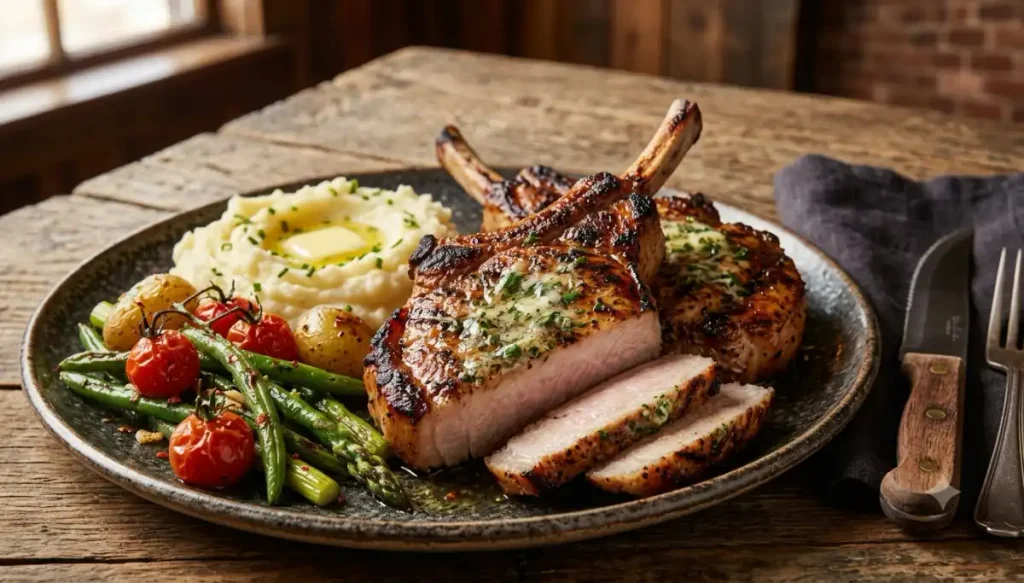
I like serving these pork chops with creamy mashed potatoes, roasted vegetables, steamed asparagus, or a simple green salad.
The restaurant’s menu has paired its Cowboy Pork Chops within its steakhouse-style menu, and its published menu has also listed sides such as baked potatoes, sweet potatoes, asparagus, and other steakhouse accompaniments.
For a more filling dinner, mashed potatoes and roasted vegetables are my favorite combination. The creamy potatoes work particularly well with the savory juices from the pork.
A Lighter Plate
If I want something lighter, I serve the pork with steamed green beans, asparagus, roasted broccoli, or a fresh salad.
Because the pork already has a rich butter finish, a fresh or lightly seasoned vegetable side helps balance the plate.
Storage and Reheating
I allow leftover pork chops to cool and then place them in an airtight container in the refrigerator.
For the best quality, I prefer eating leftovers within a few days. When reheating, I use gentle heat rather than blasting the pork at a very high temperature.
A small splash of broth or water in a covered pan can help prevent the meat from becoming excessively dry during reheating.
I avoid repeatedly reheating the same pork chop because every additional heating cycle can reduce its tenderness.
Nutrition Information
The nutrition values below are approximate and will vary according to the size of the pork chops, seasoning quantities, oil, and butter used.
Nutrition Table
| Nutrient | Approx. Per Serving |
|---|---|
| Calories | 450–550 kcal |
| Protein | 45–55 g |
| Fat | 25–34 g |
| Carbohydrates | 3–7 g |
| Fiber | 1–2 g |
| Sodium | 500–800 mg |
| Sugar | 0–2 g |
For reference, a LongHorn Steakhouse menu lists its Cowboy Pork Chops as two 8-ounce center-cut bone-in pork chops and has listed the dish at 680 calories in published menus. Exact nutrition will depend on preparation and serving size.
Frequently Asked Questions
What is a cowboy pork chop?
A cowboy pork chop is generally a thick, bone-in pork chop. The LongHorn Steakhouse menu describes its Cowboy Pork Chops as two 8-ounce center-cut bone-in pork chops.
What makes these pork chops different from regular pork chops?
The main difference is the thickness and bone-in cut. Thick chops provide more room for developing a browned crust while keeping the center tender when cooked correctly.
Can I use boneless pork chops?
Yes. Boneless pork chops can be used, but they usually require different cooking times. I prefer thick bone-in chops because they provide the classic appearance and are more forgiving during cooking.
What temperature should pork chops reach?
The USDA recommends cooking pork chops to 145°F (63°C) followed by a three-minute rest. A meat thermometer is the most reliable way to check the internal temperature.
Why did my pork chops become dry?
Overcooking is one of the most common reasons pork chops become dry. Thin chops can also dry out quickly. Using thick chops and checking the internal temperature helps avoid this problem.
Should I marinate the pork chops first?
You do not have to marinate them for this recipe. The seasoning blend and searing technique provide plenty of flavor. If you prefer marinated pork, you can add that step, but the cooking time may need adjustment.
Can I grill these pork chops instead of using a skillet?
Yes. Thick bone-in pork chops work well on a grill. Use high heat to develop the initial crust and then move them to a cooler area to finish cooking more gently.
Can I prepare these pork chops without butter?
Yes. You can skip the garlic-butter finish, although the final dish will have a lighter and less rich flavor. Olive oil and fresh herbs can be used instead.
What sides go well with cowboy pork chops?
Mashed potatoes, baked potatoes, asparagus, roasted vegetables, green beans, and fresh salads all work well. I particularly like mashed potatoes with roasted vegetables for a classic steakhouse-style plate.
How long should I let the pork rest?
I usually let the pork rest for 3–5 minutes. The USDA specifically recommends a three-minute rest after pork reaches 145°F (63°C).
Final Thoughts on This Steakhouse-Style Dinner
A good LongHorn Steakhouse Cowboy Pork Chop Recipe is really about technique more than complicated ingredients. Starting with a thick bone-in chop, drying it properly, seasoning every surface, and giving it a strong sear creates the foundation for a satisfying dinner.
I especially like finishing the pork with garlic butter because it adds a rich final layer without requiring a complicated sauce. Once the chop reaches the proper internal temperature, a short resting period helps finish the dish properly.
If you want that classic American steakhouse feeling at home, this recipe gives you a practical way to build it from the skillet up. The result is a thick, golden-brown pork chop with bold seasoning, a juicy center, and a buttery garlic finish.
LongHorn Steakhouse Cowboy Pork Chop Recipe
This LongHorn Steakhouse Cowboy Pork Chop recipe is a juicy, golden-brown steakhouse-style dinner made with thick bone-in pork chops, bold seasonings, and a simple searing method.
Type: Main Course
Cuisine: American
Keywords: LongHorn Steakhouse Cowboy Pork Chop Recipe, Cowboy Pork Chop Recipe, LongHorn Pork Chop Recipe, Steakhouse Pork Chops, Bone-In Pork Chop Recipe, Copycat Cowboy Pork Chops
Recipe Yield: 4 servings
Calories: 680 calories per serving
Preparation Time: PT10M
Cooking Time: PT20M
Total Time: PT30M
Recipe Ingredients:
- 2 tablespoons olive oil
- 4 thick-cut bone-in pork chops
- 1 teaspoon paprika
- 1 teaspoon garlic powder
- 1 teaspoon onion powder
- teaspoon Italian seasoning
- teaspoon Creole seasoning
- 1 teaspoon salt
- 1/2 teaspoon black pepper
- 2 tablespoons butter
- 3 garlic cloves, minced
- 1 tablespoon fresh parsley
Recipe Instructions: Pat the bone-in pork chops completely dry with paper towels. In a small bowl, combine paprika, garlic powder, onion powder, Italian seasoning, Creole seasoning, salt, and black pepper. Rub the seasoning mixture evenly over both sides of each pork chop and let them sit for a few minutes so the seasoning can settle into the meat. Heat olive oil in a heavy skillet over medium-high heat until hot. Carefully place the seasoned pork chops into the skillet and sear them until a deep golden-brown crust develops. Turn the chops and sear the other side until evenly browned. Avoid moving the pork chops too much while they are searing, as this helps create a better crust. Reduce the heat slightly and add butter and minced garlic to the skillet. Once the butter melts, spoon the garlic butter repeatedly over the pork chops while they continue cooking. This adds extra flavor and helps keep the surface rich and juicy. Continue cooking the pork chops until the thickest part reaches 145°F (63°C) on a food thermometer. USDA recommends allowing cooked pork chops to rest for at least three minutes before carving or eating. � Ask USDA Transfer the cooked Cowboy Pork Chops to a clean plate and let them rest for a few minutes. Serve them warm with mashed potatoes, roasted vegetables, or your favorite steakhouse-style side dishes. Spoon any remaining garlic butter from the skillet over the pork before serving for an extra flavorful finish.