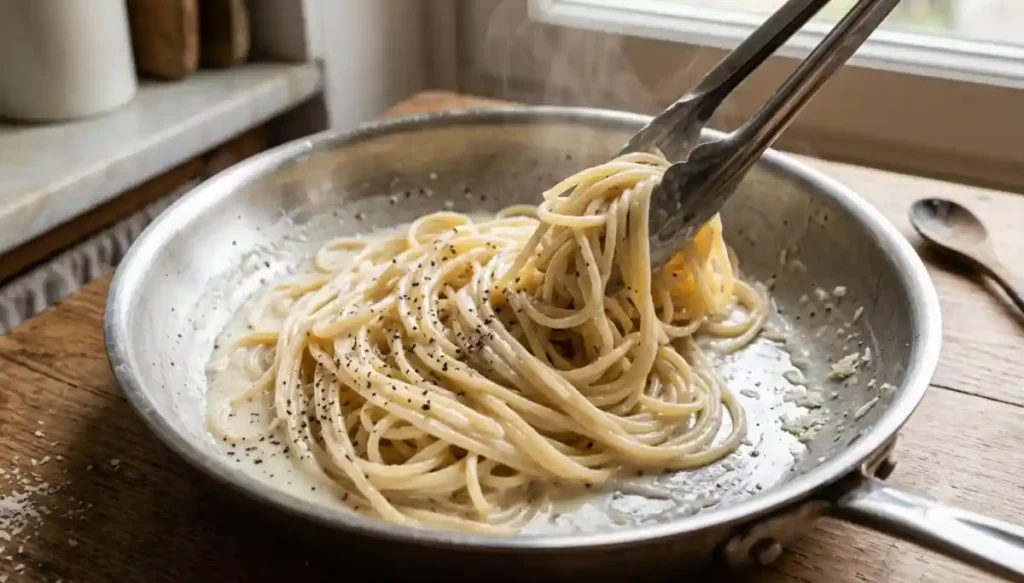
Authentic Cacio e Pepe Recipe: When I first made an authentic cacio e pepe recipe, I understood why this simple Roman pasta has such a loyal following. There is no tomato sauce, no cream, no garlic, no butter, and no long list of vegetables or spices. Instead, the entire dish depends on just a few ingredients and the technique used to bring them together.
Cacio e pepe literally means “cheese and pepper,” and the classic Roman preparation centers on Pecorino Romano, black pepper, pasta, and pasta cooking water. The cooking water is especially important because its starch helps transform the cheese into the silky sauce that coats the pasta.
Hi, my name is Om Shinde. I am a chef and a food lover who enjoys turning straightforward ingredients into something genuinely satisfying. I especially enjoy recipes where technique matters more than complicated ingredients, and cacio e pepe is exactly that kind of dish.
This is my detailed homemade approach to cacio e pepe. I have kept the ingredients close to the traditional Roman style while explaining the small details that can make the difference between a smooth, creamy sauce and a bowl of clumpy cheese.
Why This Roman Classic Is Trickier Than It Looks
Cacio e pepe looks almost too easy on paper. Cook pasta, add cheese, add pepper, and mix. But the famous creamy texture does not happen automatically.
The challenge is temperature and moisture. Pecorino Romano can become stringy or form small lumps when exposed to excessive heat, while too much water can make the sauce thin. The goal is to combine finely grated cheese with the right amount of starchy pasta water while avoiding direct high heat. Traditional sources describe this creamy mixture as the dish’s essential “cremina.”
That is why I treat the pasta water almost like another ingredient rather than something I simply pour down the sink after cooking.
A Small Ingredient List With Big Responsibilities
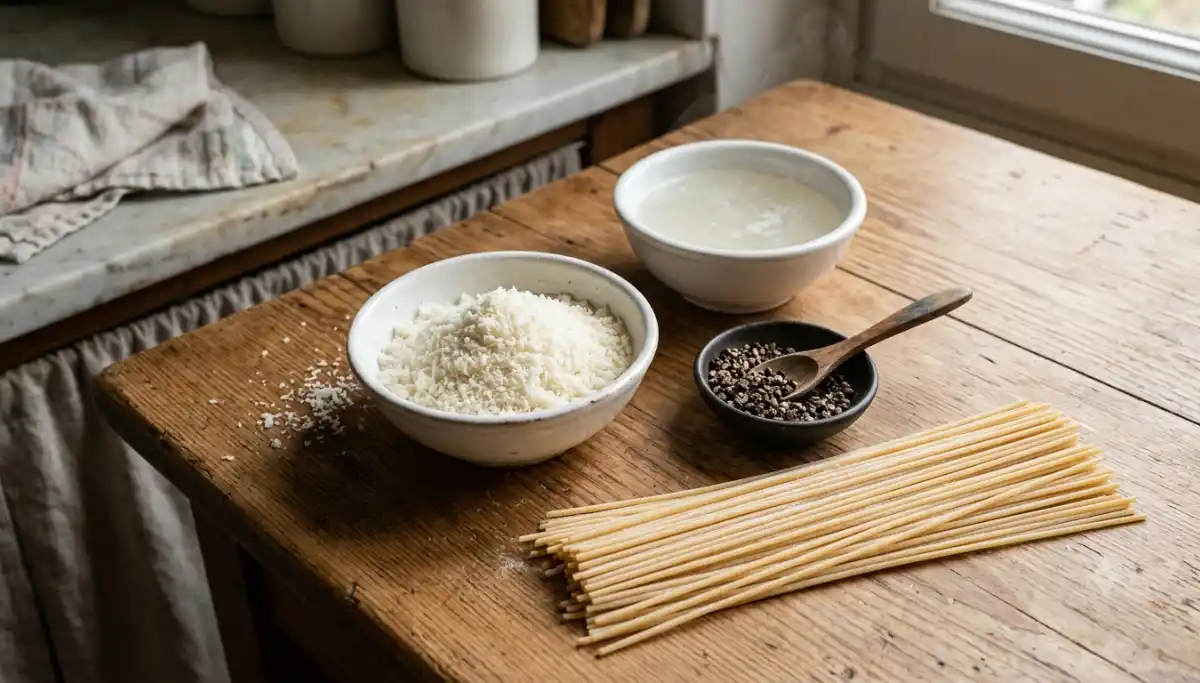
| Ingredient | Quantity | Notes |
|---|---|---|
| Spaghetti or tonnarelli | 8 oz | Tonnarelli is a traditional Roman choice |
| Pecorino Romano | 4–5 oz | Finely grated |
| Freshly ground black pepper | 1–2 tsp | Adjust to taste |
| Pasta cooking water | 1–1½ cups reserved | Add gradually |
| Salt | As needed | Use moderately because Pecorino is salty |
Tonnarelli is particularly associated with Roman cacio e pepe, although spaghetti is also widely used. Traditional references describe tonnarelli as a thick, square-shaped pasta that works especially well with the sauce, while good-quality spaghetti is a perfectly practical choice at home.
For the cheese, I strongly recommend Pecorino Romano. It has the salty, sheep’s-milk character that gives this dish its unmistakable identity. I also prefer buying a piece and grating it myself immediately before cooking rather than using pre-grated cheese.
The Three Ingredients I Refuse to Compromise On
Pecorino Romano Is the Heart
The cheese is not just a topping here. It is the sauce.
I finely grate Pecorino Romano so that it can combine more easily with the warm pasta water. Larger shreds take longer to melt and can make the sauce less uniform.
Some modern versions combine Pecorino Romano with Parmigiano Reggiano, but for the traditional character I want from this recipe, I keep Pecorino Romano at the center.
Fresh Black Pepper Brings the Dish Alive
Black pepper is the second major flavor, so I do not treat it as an afterthought.
I prefer freshly cracked pepper rather than very fine pre-ground pepper. Briefly toasting the pepper in a dry pan can release more of its aroma and give the finished pasta a deeper pepper flavor. Traditional recipes also use this technique.
Pasta Water Is the Quiet Hero
This is probably the most important technique in the entire recipe.
As pasta cooks, some of its starch moves into the water. That starchy liquid helps bind the Pecorino and creates the creamy consistency associated with cacio e pepe.
I always reserve more pasta water than I think I will need. It is much easier to add another spoonful than to discover that I have already drained the water I needed.
The Method I Use for a Silky Sauce
Step 1: Grate the Pecorino Very Finely
I start by finely grating the Pecorino Romano and placing it in a bowl.
I want the cheese to have a fine, almost powdery texture because this helps it incorporate into the warm pasta water more evenly.
I do this before cooking the pasta so that everything is ready when the spaghetti reaches the right stage.
Step 2: Toast the Pepper
I place a large dry skillet over medium-low heat and add the freshly cracked black pepper.
I gently toast it for a short time, moving it around the pan so it does not burn.
When the pepper becomes noticeably fragrant, I add a small amount of pasta cooking water to the pan. The water helps loosen the toasted pepper and creates the beginning of the flavor base.
Step 3: Cook the Pasta Until Al Dente
I bring a large pot of water to a boil and season it moderately with salt.
Because Pecorino Romano is already quite salty, I avoid making the cooking water excessively salty.
I add the pasta and cook it until al dente, following the package timing while checking it shortly before the recommended finish.
Before draining anything, I reserve plenty of pasta water.
Step 4: Build the Pecorino Cream
This is where I slow down.
I place the finely grated Pecorino in a bowl and gradually add warm pasta water while stirring continuously.
I do not dump all the water in at once. I add a little, mix, check the consistency, and add more only when necessary.
The goal is a smooth cheese paste that looks creamy rather than watery. Traditional methods also emphasize removing the pasta from direct heat before combining it with the Pecorino to reduce the risk of clumping.
Step 5: Bring Pasta and Pepper Together
When the pasta is al dente, I transfer it directly into the skillet containing the toasted pepper and its small amount of cooking water.
I toss the pasta thoroughly so the pepper coats the strands.
If the pasta looks dry, I add a small splash of reserved cooking water and continue tossing.
Step 6: Take It Away From Direct Heat
This is one of the steps I pay the most attention to.
I remove the pan from direct heat and allow the pasta to cool for a brief moment before introducing the Pecorino mixture.
Very high heat can make the cheese seize instead of becoming smooth, which is one of the most common problems when preparing cacio e pepe.
Step 7: Create the Famous Creamy Coating
I add the Pecorino mixture gradually while tossing the pasta continuously.
I keep moving the spaghetti so the cheese, pepper, and starchy water emulsify around the noodles.
If the sauce looks too thick, I add a teaspoon or two of pasta water. If it looks too loose, I continue tossing for a moment rather than immediately adding more cheese.
The finished sauce should cling to the pasta instead of sitting like a separate liquid at the bottom of the plate.
Step 8: Finish and Serve Immediately
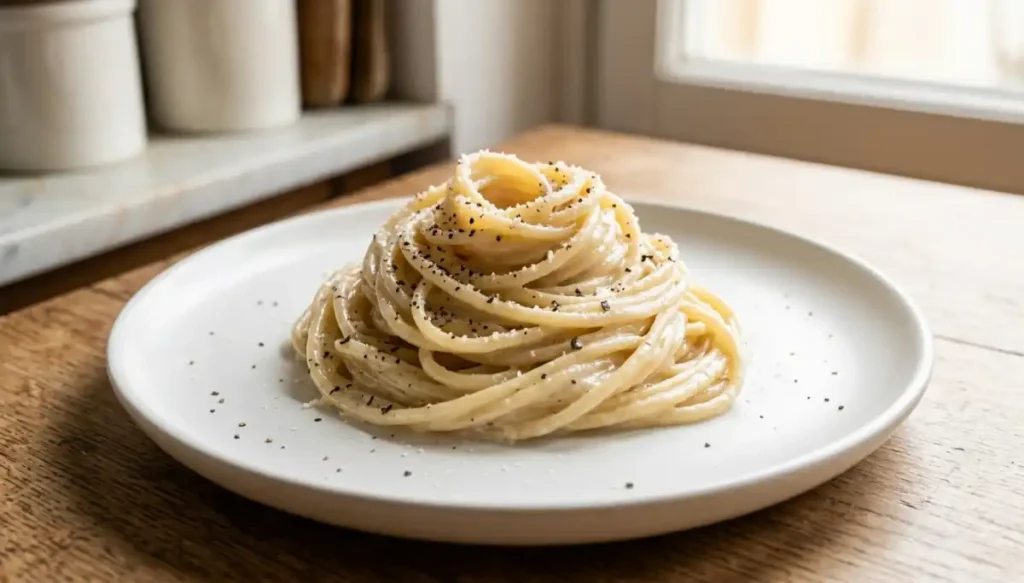
Once the pasta looks glossy and creamy, I plate it immediately.
I finish with another small amount of finely grated Pecorino Romano and a generous crack of black pepper.
Cacio e pepe is one of those dishes I prefer to eat as soon as it reaches the plate. The sauce becomes thicker as it cools, so serving it immediately gives you the best texture.
Read Also: Peggy Goldschmidt Cookie Recipe: The Buttery Family Classic
The Little Details That Change Everything
Why I Grate the Cheese Myself
Freshly grated cheese gives me more control over texture.
Pre-grated Pecorino can be drier and may not blend as smoothly. A traditional recipe source specifically recommends grating the cheese immediately before preparation and notes that older, drier Pecorino can be more prone to forming lumps.
Why I Do Not Add Cream
Cream may make a pasta sauce creamy, but authentic cacio e pepe does not need it.
The characteristic sauce comes from Pecorino, pepper, and starchy pasta water. Traditional Roman descriptions specifically note that cream, butter, and oil are not part of the original preparation.
Why the Water Should Be Added Slowly
There is no universal magic measurement for pasta water because the amount of starch depends on the pasta, cooking water, pot, and quantity of pasta being cooked.
I therefore prefer adding it gradually. I can always loosen the sauce, but once I have added too much water, correcting the consistency becomes harder.
How I Avoid a Lumpy Cacio e Pepe
The dreaded cheese clumps usually come from a combination of excessive heat, poorly incorporated cheese, or an unsuitable cheese-to-water balance.
I keep the Pecorino finely grated, avoid adding it directly over high heat, and incorporate the pasta water gradually. I also keep the pasta moving while the sauce comes together.
If the cheese begins forming tiny strings, I do not immediately add more cheese. Instead, I remove the pasta from heat and work in a small amount of warm pasta water while tossing vigorously.
My Best Serving Suggestions
Cacio e pepe does not need a complicated side dish.
I like serving it with a simple green salad, roasted vegetables, or a piece of crusty bread if I want a larger meal. Because the pasta itself is rich and intensely flavored, lighter sides work particularly well.
I also recommend serving it in warm bowls. The sauce stays smoother for longer when the pasta is not immediately transferred onto a cold plate.
Storage and Reheating
Cacio e pepe is at its best immediately after preparation, so I prefer making only the amount I plan to eat.
If you have leftovers, place them in an airtight container and refrigerate them promptly. The sauce will naturally become firmer as it cools because the cheese solidifies.
When reheating, use gentle heat and add a small splash of water. Toss frequently to loosen the sauce. I would avoid aggressively boiling the leftovers because high heat can make the cheese separate.
For the best texture, however, fresh preparation is definitely my preference.
Nutrition Information
The following figures are approximate and will vary depending on the pasta, amount of Pecorino, and exact serving size.
| Nutrient | Approximate Amount |
|---|---|
| Calories | 400–500 kcal |
| Carbohydrates | 55–65 g |
| Protein | 18–22 g |
| Fat | 14–20 g |
| Saturated Fat | 8–11 g |
| Fiber | 2–4 g |
| Sodium | 700–1,000 mg |
| Calcium | High |
Because Pecorino Romano is naturally salty and concentrated, the sodium content can be significant. These values are estimates rather than laboratory-tested nutrition data.
Frequently Asked Questions
What does cacio e pepe mean?
Cacio e pepe translates to “cheese and pepper.” It is a classic Roman pasta built around Pecorino Romano, black pepper, pasta, and cooking water.
What cheese is traditionally used in cacio e pepe?
Pecorino Romano is the traditional cheese associated with the dish. It provides the salty, sharp flavor that defines the sauce.
Can I use Parmesan instead of Pecorino Romano?
You can, but the flavor will be different. Parmesan is milder and less salty, so it will not give you the same traditional Roman character.
Is cacio e pepe supposed to contain cream?
Traditional cacio e pepe does not require cream. Its creamy texture comes from Pecorino Romano, starchy pasta water, and the emulsifying technique.
What pasta is best for cacio e pepe?
Tonnarelli is strongly associated with Roman cacio e pepe, while spaghetti is also commonly used. A good-quality spaghetti is an easy choice for home cooking.
Why does my Pecorino cheese become lumpy?
The most common issue is excessive heat. Adding cheese directly to a very hot pan can cause it to seize. Finely grate the Pecorino, use warm starchy water, and combine the cheese away from intense direct heat.
How much pasta water should I use?
There is no single perfect amount. Start with a small quantity and add more gradually until the cheese becomes smooth and the sauce coats the pasta.
Can I make cacio e pepe without black pepper?
Black pepper is one of the defining ingredients, so leaving it out changes the dish considerably. For the classic flavor, freshly cracked black pepper is the better choice.
Can I prepare cacio e pepe ahead of time?
I recommend preparing and serving it immediately. The sauce becomes thicker as it cools, and reheating can change the texture.
Why is my cacio e pepe too dry?
The sauce may need a little more pasta cooking water. Add it gradually while tossing until the Pecorino becomes smooth and coats the pasta.
The Simple Finish I Always Look For
For me, a good cacio e pepe should arrive at the table looking almost effortless. The spaghetti should be coated rather than drowned, the Pecorino should form a smooth glossy layer, and the black pepper should be visible throughout the dish.
What makes this recipe special is not a secret ingredient hidden in the pantry. It is the way a few ordinary ingredients are handled. The pasta water provides the moisture and starch, Pecorino supplies the richness and salt, and freshly cracked pepper gives the dish its unmistakable aroma and bite.
That is why I keep coming back to cacio e pepe. It is simple enough for an ordinary dinner but technical enough to teach you something every time you make it. Once you understand the balance between cheese, heat, and pasta water, you can turn a handful of ingredients into a genuinely satisfying Roman-style pasta.




[…] Read Also: Authentic Cacio e Pepe Recipe: The Roman Pasta I Keep Coming Back To […]