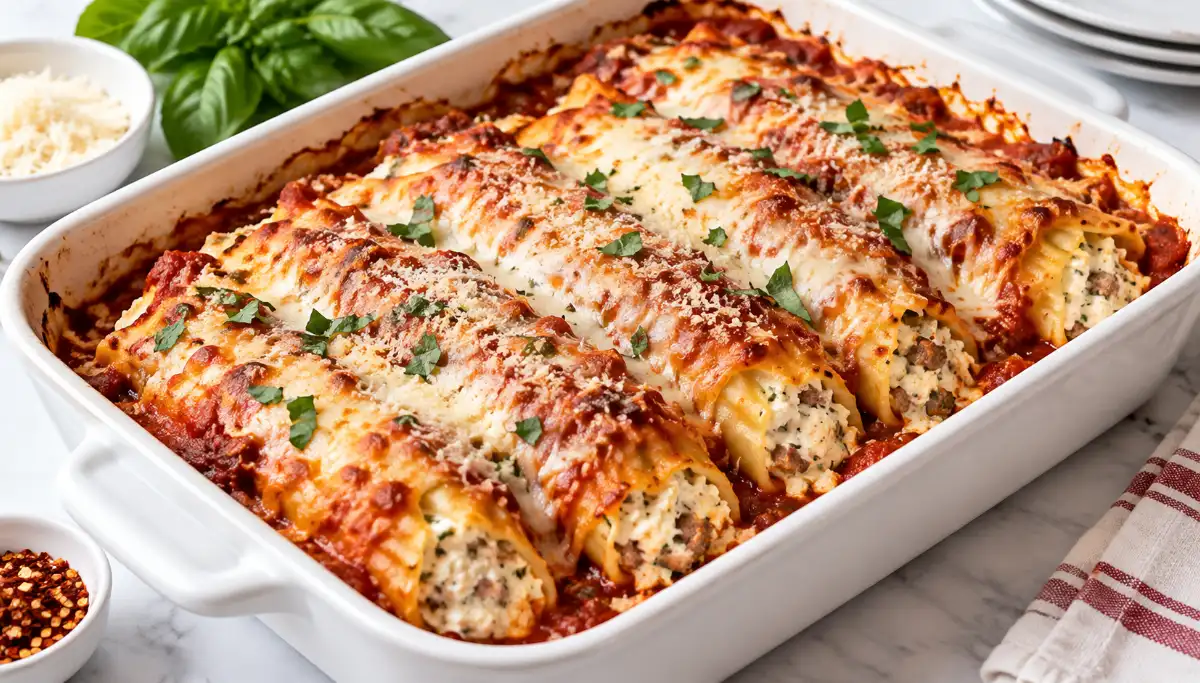
Valerie Bertinelli Manicotti recipe: Valerie Bertinelli’s Manicotti with Italian Sausage is the kind of baked pasta that feels made for a relaxed family dinner. Tender manicotti shells are filled with a creamy ricotta and sausage mixture, covered with homemade tomato sauce, and finished with plenty of mozzarella and Parmesan. Valerie’s published version is a recipe from Valerie’s Home Cooking and makes about 4 to 6 servings.
What I like most about this recipe is that it does not try to make manicotti complicated. The dish has several components, but each one has a clear purpose. The tomato sauce brings acidity and richness, the sausage adds savory flavor, and the ricotta and cheese create the creamy center that makes every bite feel hearty.
Hi, my name is Om Shinde. I am a chef, and I enjoy making recipes that bring familiar ingredients together in a way that feels special. I like recipes that can be prepared for family dinners, weekend meals, or occasions when I want something a little more comforting than an everyday pasta dish.
When I make manicotti, I pay particular attention to the pasta shells. They should be softened enough to fill easily but not cooked until completely tender. This small detail makes the finished dish much easier to handle and helps the shells hold their shape during baking.
Recipe Overview
| Detail | Information |
|---|---|
| Prep Time | 45 minutes |
| Cook Time | About 50 minutes |
| Cooling & Resting Time | About 1 hour 35 minutes |
| Total Time | About 3 hours 10 minutes |
| Cuisine | Italian-American |
| Course | Main Dish |
| Servings | 4–6 |
| Difficulty | Easy to Moderate |
| Estimated Cost | $18–$25 |
The original recipe lists a total time of 3 hours 10 minutes because the tomato sauce needs time to cool and the prepared filling is refrigerated before the shells are stuffed.
What Makes This Manicotti Worth the Extra Time
There are plenty of quick pasta recipes, but this one has a different feeling. The sauce is cooked separately, the sausage is browned before becoming part of the filling, and the cheeses are mixed into a rich stuffing.
I think that extra preparation is exactly what makes the final dish so satisfying. Instead of simply putting pasta and sauce together, every layer gets a chance to develop its own flavor.
The combination of hot and sweet Italian sausage is especially interesting. The hot sausage adds a little heat, while the sweet sausage gives the filling a rounder, richer flavor. Valerie’s original recipe uses 4 ounces of each.
The Ingredients That Build the Flavor
| Ingredient | Quantity | Purpose |
|---|---|---|
| Extra-virgin olive oil | 4 tbsp | Cooking |
| Hot Italian sausage | 4 oz | Savory heat |
| Sweet Italian sausage | 4 oz | Richness |
| Yellow onion | 1 cup, chopped | Sauce base |
| Garlic | 4 cloves, minced | Flavor |
| Tomato paste | 2 tbsp | Deep tomato flavor |
| Crushed tomatoes | Two 28-oz cans | Sauce |
| Granulated sugar | 1 tsp | Balancing acidity |
| Fresh bay leaves | 3 | Aromatic flavor |
| Unsalted butter | 4 tbsp | Finishing sauce |
| Fresh basil | 2/3 cup, chopped | Fresh herbal flavor |
| Ricotta | 2 cups | Filling |
| Low-moisture mozzarella | 3 cups, shredded | Filling and topping |
| Parmesan | 2 1/2 cups, grated | Filling and topping |
| Manicotti shells | 8-oz package | Pasta base |
| Kosher salt | As needed | Seasoning |
| Freshly ground black pepper | As needed | Seasoning |
These quantities follow the published Valerie Bertinelli recipe.
I recommend measuring everything before starting because this recipe moves through several stages. Having the cheese, sausage, tomatoes, and herbs ready makes the process much smoother.
The Equipment I Keep Ready
| Equipment | Purpose |
|---|---|
| Large saucepot | Making tomato sauce |
| Large skillet or pot | Browning sausage |
| Large pot | Cooking manicotti shells |
| 9 × 13-inch baking dish | Baking the manicotti |
| Large piping bag | Filling shells |
| Wooden spoon | Stirring sauce and sausage |
| Mixing bowl | Preparing filling |
| Foil | Covering the baking dish |
| Measuring cups and spoons | Accurate measurements |
| Colander | Draining pasta |
A large piping bag is particularly useful for this recipe because it makes filling the manicotti shells much easier and cleaner. The original recipe specifically calls for one.
Start With a Rich Tomato Sauce
Step 1: Brown the Sausage
I begin by heating two tablespoons of olive oil in a large pot over medium heat. I add the hot and sweet Italian sausages and break them into small pieces as they cook.
I let them brown properly instead of stirring constantly. Once the sausage develops some caramelized edges, I remove it from the pot and set it aside. This usually takes around 8 to 10 minutes.
Step 2: Build the Tomato Base
I add the remaining olive oil to the same pot and cook the chopped onion until it becomes soft and translucent. Then I add the minced garlic and cook it briefly.
Next, I stir in the tomato paste. Cooking the paste for a short time deepens its flavor and gives the sauce a richer color.
I then add the crushed tomatoes, sugar, bay leaves, salt, and black pepper. I bring everything to a gentle simmer before reducing the heat.
Step 3: Let the Sauce Develop
I allow the tomato sauce to simmer for about 30 minutes. This gives the ingredients enough time to come together and creates a fuller flavor.
After simmering, I melt the butter into the sauce, remove the bay leaves, and stir in half of the chopped fresh basil.
One important part is letting the sauce cool. The original recipe calls for cooling it to room temperature for around 40 minutes before using it in the filling.
The Creamy Filling Is Where It Gets Good
Step 4: Mix the Cheese Filling
While the sauce cools, I prepare the filling.
I combine ricotta, the reserved cooked sausage, the remaining fresh basil, 1 1/2 cups mozzarella, and 1 1/2 cups Parmesan.
I season the mixture with salt and pepper, then fold in one cup of the cooled tomato sauce.
This creates a filling that is creamy but still has plenty of texture from the sausage and cheese.
Step 5: Chill Before Stuffing
I transfer the filling into a large piping bag and refrigerate it for about 30 minutes.
This step might feel unnecessary when you are eager to finish the recipe, but chilling makes the filling easier to control when piping it into the shells.
I find that a slightly chilled filling also helps prevent the mixture from becoming too loose while working.
Preparing the Manicotti Shells
Step 6: Heat the Oven
I preheat the oven to 375°F.
Before filling the shells, I also prepare a 9 × 13-inch baking dish because the manicotti will be assembled directly inside it.
Step 7: Partially Cook the Pasta
I bring a large pot of salted water to a boil.
The manicotti shells are cooked for about 5 minutes. The goal is not to make them completely tender. They should soften slightly while still maintaining their tubular shape.
This is one of the most important steps in the recipe. If the shells become too soft, they can tear while being filled.
I drain them carefully and allow them to cool enough to handle.
Read Also: Kingston Biscuits and Peaches Recipe
The Easy Assembly Trick I Use
Step 8: Start With Sauce
I spread half of the cooled tomato sauce across the bottom of the baking dish.
This creates a flavorful base and helps keep the pasta from sticking directly to the dish.
Step 9: Fill the Shells
I use the piping bag to fill each manicotti shell with the ricotta and sausage mixture.
I try not to overfill them because the filling expands slightly during baking. If some filling remains, it can be piped around the ends of the shells once they are arranged in the dish.
Step 10: Add More Sauce and Cheese
Once all the filled shells are arranged in the baking dish, I spoon the remaining tomato sauce over the top.
Then I finish with the remaining mozzarella and Parmesan.
At this point, the dish already looks incredibly comforting, with the bright tomato sauce contrasting against the pale cheese and pasta.
The Final Bake Creates the Golden Finish
Step 11: Cover and Bake
I cover the baking dish with foil and bake the manicotti at 375°F until the sauce is bubbling, which takes around 40 minutes.
Covering the dish helps the pasta heat through without allowing the cheese to brown too quickly.
Step 12: Brown the Cheese
After the first bake, I remove the foil and increase the oven temperature to 425°F.
I return the manicotti to the oven for about 10 minutes, allowing the cheese on top to become browned and bubbling.
This final stage is my favorite because the dish develops those golden, slightly crisp cheese spots while the sauce continues bubbling around the pasta.
Step 13: Let It Rest
I let the manicotti cool slightly before serving.
This short resting period makes the dish easier to serve because the filling has a chance to settle inside the shells instead of immediately spilling out when cut or lifted.
How I Make the Texture Just Right
The texture of manicotti depends heavily on how you handle the pasta shells.
I never want the shells to be completely soft before filling. Slightly undercooking them gives them enough strength to hold the ricotta and sausage mixture without falling apart.
I also avoid making the filling too wet. Since the filling already contains ricotta and tomato sauce, adding extra liquid can make the finished manicotti less structured.
The sauce should be rich enough to coat the pasta but not so watery that the dish becomes soupy.
A Few Simple Serving Ideas
I like serving this manicotti as the centerpiece of a family dinner.
A simple green salad makes a fresh contrast to the rich cheese and tomato sauce. Garlic bread or crusty Italian bread is another easy choice, especially because it gives you something to soak up the extra sauce. For a larger dinner, I would pair the manicotti with roasted vegetables, sautéed greens, or a light appetizer.
Because the dish is already rich, I prefer sides that are fresh and simple rather than adding another heavy cheese-based dish.
Storage and Reheating
Leftover manicotti can be stored in an airtight container in the refrigerator. When reheating, I prefer using the oven because it helps warm the pasta evenly while keeping the cheese topping enjoyable. Covering the dish loosely with foil can prevent the top from becoming too dry.
For a single serving, a microwave can also work. I recommend heating it gradually rather than using maximum power for a long time. If you are preparing the dish ahead, keeping the components chilled until assembly can make dinner preparation easier.
Nutrition Information
Nutrition will vary depending on the exact sausage, cheese, and portion size used. A published nutrition listing for this recipe reports approximately 1,047 calories per serving, along with about 60 grams of protein, 65 grams of fat, and 60 grams of carbohydrates.
Because the recipe is particularly rich in cheese and sausage, I consider it more suitable as a hearty main dish rather than a light pasta meal.
| Nutrient | Approx. Amount |
|---|---|
| Calories | 1,047 kcal |
| Protein | 60 g |
| Fat | 65 g |
| Carbohydrates | 60 g |
These figures are approximate and can vary depending on ingredients, brands, serving size, and preparation.
Frequently Asked Questions
What is Valerie Bertinelli Manicotti Recipe?
It is a baked manicotti recipe made with Italian sausage, ricotta, mozzarella, Parmesan, and a homemade tomato sauce. Valerie Bertinelli’s published version uses both hot and sweet Italian sausage for the filling.
How many people does this recipe serve?
The original recipe yields approximately 4 to 6 servings.
Can I use only sweet Italian sausage?
Yes. You can use only sweet Italian sausage if you do not want the heat from hot Italian sausage. The flavor will be milder.
Can I make the manicotti ahead of time?
Yes. You can prepare the sauce and filling ahead of time and refrigerate them until you are ready to assemble the dish. Preparing components in advance can make the final dinner much easier.
Why should I only partially cook the manicotti shells?
Partially cooking the shells keeps them firm enough to fill without tearing. Valerie’s recipe calls for cooking the shells for about five minutes so they soften slightly while retaining their tubular shape.
Can I replace ricotta cheese?
Ricotta gives the filling its characteristic creamy texture. If necessary, cottage cheese can be used as an alternative, although the texture and flavor will be somewhat different.
Can I use store-bought tomato sauce?
Yes, if you are short on time. However, the original recipe makes its own tomato sauce using crushed tomatoes, onion, garlic, tomato paste, basil, butter, and seasonings.
What should I serve with manicotti?
I like serving it with a simple green salad, garlic bread, roasted vegetables, or lightly dressed greens. These sides balance the richness of the pasta.
How do I prevent the shells from breaking?
Do not overcook them. Cook them only until they soften slightly, then handle them gently while filling. Using a piping bag also makes the process easier.
Can I freeze manicotti?
Manicotti can be frozen as a make-ahead meal, although the texture may change slightly after freezing and reheating. For the best texture, I prefer preparing it fresh or refrigerating it for short-term storage.
Why This Recipe Deserves a Place at the Dinner Table
Valerie Bertinelli’s manicotti is not the fastest pasta recipe I have made, but I think the extra effort is worthwhile.
The combination of homemade tomato sauce, browned Italian sausage, creamy ricotta, mozzarella, and Parmesan creates a dish that feels substantial without requiring complicated cooking techniques. The partially cooked pasta shells also make the filling process much easier once you get the timing right.
What I enjoy most is the contrast between the bright tomato sauce and the rich cheese filling. After baking, the top becomes golden and bubbly while the inside stays soft and creamy.
If you are looking for a comforting Italian-American dinner that can feed a family and also feel special enough for a weekend meal, this Valerie Bertinelli Manicotti Recipe is a great one to try.
Valerie Bertinelli Manicotti Recipe: A Cheesy Italian Classic
A hearty baked manicotti recipe inspired by Valerie Bertinelli, filled with ricotta, Italian sausage, mozzarella and Parmesan, then baked in a rich tomato-basil sauce.
Type: Main Dish
Cuisine: Italian-American
Keywords: Valerie Bertinelli manicotti recipe, manicotti with Italian sausage, Italian sausage manicotti, baked manicotti recipe, ricotta manicotti, cheesy manicotti, Italian pasta recipe
Recipe Yield: 4-6 servings
Calories: 1047 calories per serving
Preparation Time: PT45M
Cooking Time: PT50M
Total Time: PT3H10M
Recipe Ingredients:
- 4 tablespoons extra-virgin olive oil
- 4 ounces hot Italian sausage
- 4 ounces sweet Italian sausage
- 1 cup chopped yellow onion
- 4 cloves garlic, minced
- 2 tablespoons tomato paste
- 2 cans crushed tomatoes, 28 ounces each
- 1 teaspoon granulated sugar
- 3 fresh bay leaves
- Kosher salt
- Freshly ground black pepper
- 4 tablespoons unsalted butter
- 2/3 cup fresh basil, chopped
- 2 cups ricotta
- 3 cups shredded low-moisture mozzarella
- 2 1/2 cups grated Parmesan
- package manicotti, 8 ounces
Recipe Instructions: Start by heating 2 tablespoons of olive oil in a large skillet over medium heat. Add the hot Italian sausage and sweet Italian sausage, breaking them into small pieces as they cook. Brown the sausage for about 8–10 minutes, then transfer it to a plate and set aside. Add the remaining olive oil to the same skillet and cook the chopped onion until softened. Stir in the minced garlic and tomato paste, then add the crushed tomatoes, sugar and bay leaves. Season with kosher salt and freshly ground black pepper. Let the sauce simmer for about 30 minutes so the flavors come together. Remove the bay leaves from the sauce and stir in the butter and 1/3 cup of the chopped fresh basil. Allow the sauce to cool to room temperature for about 40 minutes before using it with the filling. In a large bowl, combine the ricotta, cooked sausage, remaining basil, 1 1/2 cups mozzarella and 1 1/2 cups Parmesan. Season with salt and pepper, then fold in 1 cup of the cooled tomato sauce. Transfer the filling to a large piping bag and refrigerate it for about 30 minutes. Preheat the oven to 375°F. Bring a large pot of salted water to a boil and cook the manicotti shells for about 5 minutes. They should be softened but still firm enough to hold their tubular shape. Drain the shells carefully. Spread half of the prepared tomato sauce across the bottom of a 9×13-inch broiler-proof baking dish. Fill each manicotti shell with the chilled ricotta and sausage mixture, then arrange the filled shells in the baking dish. Pipe any remaining filling into the ends of the shells if needed. Pour the remaining tomato sauce over the manicotti and sprinkle the remaining mozzarella and Parmesan evenly over the top. Cover the dish with foil and bake for about 40 minutes, until the sauce is bubbling and the cheese is melted. Remove the foil and increase the oven temperature to 425°F. Continue baking for about 10 minutes, or until the cheese becomes golden brown and bubbly. Let the manicotti cool slightly before serving, then garnish with a little fresh basil if desired.
2 thoughts on “Valerie Bertinelli Manicotti Recipe: A Cheesy Italian Classic”